





How Cul-de-Sacs Are Killing Your Community

cul-de-sacs

The Harvard Business Review has a piece this month on research by Lawrence Frank, Bombardier Chair in Sustainable Transportation at the University of British Columbia, on the effects of cul-de-sacs in neighborhoods in King County, Washington. He found that residents in areas with the most interconnected streets travel 26% fewer miles by automobile than those in areas with many cul-de-sacs. Meanwhile, recent studies by Frank and others show that the higher a neighborhood’s overall walkability, the greater the amount of walking and biking— which means a drop in per capita air pollution, fuel use, and body mass index.

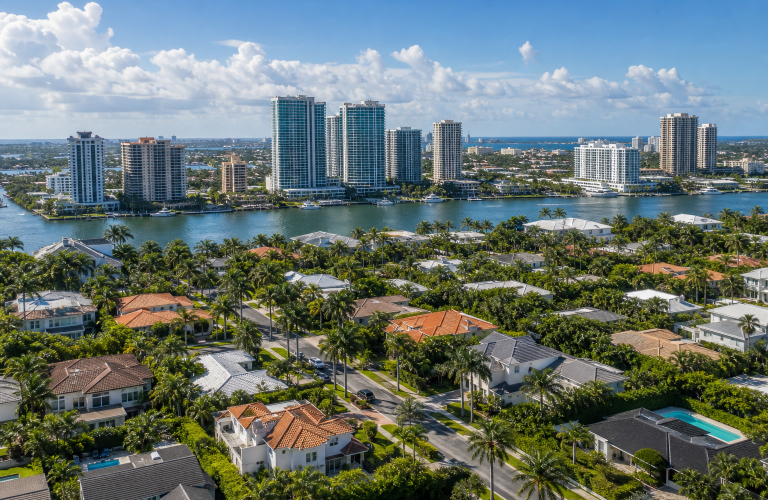
The theory behind cul-de-sacs was that they lessened traffic, since they change the primary function of local streets — rather than offering a way to get anywhere, now they simply provide access to private residences. The problem is that this design inherently encourages car use, even for the shortest trips. It also limits the growth of communities and transportation options. Consider the above maps of one-kilometer walks in two different Seattle suburbs — the first, in Woodinville, is all cul-de-sacs that result in a disconnected jumble of streets with no walking or bike paths, while the second, in Ballard, offers an interconnected network of streets that provide easy access to shopping, parks, and other destinations. The argument that cul-de-sacs increase safety because they limit traffic is also misguided — the more empty and desolate a suburban (and often affluent) street is, the more likely crime is to occur. Also, it’s much harder for emergency vehicles to reach these homes if they’re sequestered in the belly of a web of disconnected dead-ends.

рецепты блюд от мамы каждый день!

As more and more direct evidence piles up that these dead-end developments are doing no one any good, the cul-de-sac tides are beginning to change: Last year, the Virginia legislature passed a law limiting cul-de-sacs in future developments. And if other states see the benefits for VA –  more efficient streets that are cheaper to maintain, as well as other savings from not having to widen arterial roads that otherwise were overburdened by cul-de-sacs — perhaps they’ll follow suit.

Image: Urban Design 4 Health

7 thoughts on “How Cul-de-Sacs Are Killing Your Community

  1. Go! transportation magazine

    The graphic says it all. It’s a powerful way to visualize how limiting a planning approach that is cul-de-sac dependent really is.

    Reply
  2. Bossi

    I’ve been to a couple neighborhoods which use vehicular cul-de-sacs but utilise a ped/bike grid system. That is, while you hit a dead-end in a car; trails & sidewalk keep going. I’d be curious for such a hybrid treatment to be considered among such studies, as well.

    Reply
  3. Alon Levy

    The graphic is precious, but I wish you’d quoted research about it by people whose salaries aren’t paid by Bombardier. Frank’s findings may be true, but his conflict of interest is too glaring. There are plenty of researchers making the same arguments who are not paid shills.

    Reply
  4. carlivar

    I agree with Bossi. In fact I used to live in a condo on a cul-de-sac, but I was able to get access by foot/bicycle to the busy “real street” next to me. It worked perfectly. I walked all the time.

    Reply
  5. mike

    According to my sister, who lives in Ballard:

    “These guys need to get their facts straight. Ballard is not a suburb (although it once was a long time ago). Comparing Woodinville to Ballard is basically comparing the suburbs to an in-City high-density residential neighborhood. Ballard is more walkable for a myriad of reasons, few culs-de-sac probably being low on the list. I don’t argue with their point, but come on. Pick better examples!”

    Reply
  6. Cascadian

    mika a,

    The problem with this is that there are really very few actual suburbs in the area that have a grid to compare. They all look like Woodinville. The Ballard neighborhood chosen is a residential area, with only the very southern tip (the bottom couple of triangular block sections) having any significant number of non-residential buildings. They deliberately avoided including the parts of Ballard that have been putting in mixed-use density. So despite being in the city proper, this is a good example of an old suburb that represents non-cul de sac neighborhoods quite well.

    I’m sure if they could have they would have used an example that didn’t have that tip in the retail part of Ballard. But if you look at a less blurry map of the area, the grid pattern breaks down north of 85th, which was the traditional city limits until the cul de sac era.

    Reply
  7. Josh

    There are many differences in cul-de-sacs and interconnected streets, one being population density. Naturally, if a community is compacted, the likelihood of neighboring residents walking to the park becomes that much greater when parks are that much closer. Cities can afford to do that with a large tax base, especially when that tax base is condensed to better organized distribution. I don’t think I’ve ever witnessed a cul-de-sac in a city environment, as most cities seem to pack as many as they can into a jail-esque format… rectangular cell, aisle, rectangular cell. I also doubt you’ll find many stacked townhouses, like in the city, on a cul-de-sac.

    Another one of the many benefits of a Cul-de-sac is different site lines leading to different style houses. Let me quickly describe a house in the city… cheese box on a grocer’s shelf. 80 different cheese boxes that all have the same dimensions but different colors.

    Also, I fail to understand this statement: “The argument that cul-de-sacs increase safety because they limit traffic is also misguided — the more empty and desolate a suburban (and often affluent) street is, the more likely crime is to occur.” If you pack more people into a small area, your more likely to incure a psychopath who can hide amongst the many “look-a-like” houses. I knew every neighbor on my cul-de-sac thanks to community parites (guess where), kids biking in the middle of the street, pick up basketball/roller hockey, etc. which were possible due to lack of traffic.

    Lastly, those cul-de-sac neighborhood formations allow for unique common ground areas and peaceful walks (with or without dog), which go figure you’re likely to come across neighbors not hiding behind the wood fences separating each other. With the cul-de-sac formations, it allows people to creatively differentiate each neighbor with landscape designs. Every city house I’ve ever seen has a porch that no one uses (thanks to A/C), bushes surrounding the concrete steps leading up to the front door, and two trees that completely take over what little bit of front yard people have. Interconnected City Streets force people to leave their neighborhoods for better, more peaceful options.

    Reply

Leave a Reply

Your email address will not be published. Required fields are marked *

You may use these HTML tags and attributes: <a href="" title=""> <abbr title=""> <acronym title=""> <b> <blockquote cite=""> <cite> <code> <del datetime=""> <em> <i> <q cite=""> <strike> <strong>