





Posted on Monday January 25th by Melissa Lafsky | 1,237

gas-taxMany people have been surprised to learn that the majority of Americans have no clue that the federal gas tax has not been raised a single cent since 1993. But the news didn’t come as a surprise to everyone: Trey Baker, a researcher at the Texas Transportation Institute, has been collecting data on the issue for some time. Specifically, he and his colleagues have been studying vehicle mileage fees and other user-based fees as an alternative to a flat fuel tax. On the subject, he writes via email:

I found the progression of the discussion in the comments section following the “How Often is the Gas Tax Raised?” article to be extremely interesting. Our public assessment research into vehicle mileage fees (VMT fees, mileage fees, road user charges, etc.) as well as the research of the Minnesota DOT has found that this lack of understanding about the fuel tax is a major barrier in getting people to talk about real reform to the nation’s transportation funding and financing system. Whenever we have gotten people to really look at:

1. How the tax is actually assessed;
2. The tax’s history with regards to increases;
3. Trends in vehicle fuel efficiency and the long term implications of these trends;

We find that people are willing to at least move beyond the old “Alaskan Bridge-to-Nowhere” discussion, which is based on the need to spend existing revenue sources more efficiently, and at least consider the need for some alternative revenue mechanism.

It seems that this topic is getting more and more coverage from transportation related media, and as a fan of the Infrastructurist I wanted to call your attention to a Web site that we here at the Texas Transportation Institute have been putting together that is aimed at collecting research on the topic of vehicle mileage fees. The site started out as a site for the first ever symposium on mileage based user fees, but we are attempting (pending some additional funding) to turn it into a one-stop-shop for all vehicle mileage fee related research.

Are user-based fees and road-use charges a better alternative? Certainly they could work to incentivizing less fuel use and greater efficiency, and could provide a solution to funding all the long-term transportation projects that the U.S. desperately needs. For a thorough discussion of the topic, check out Baker and co-author Ginger Goodin’s full summary here.

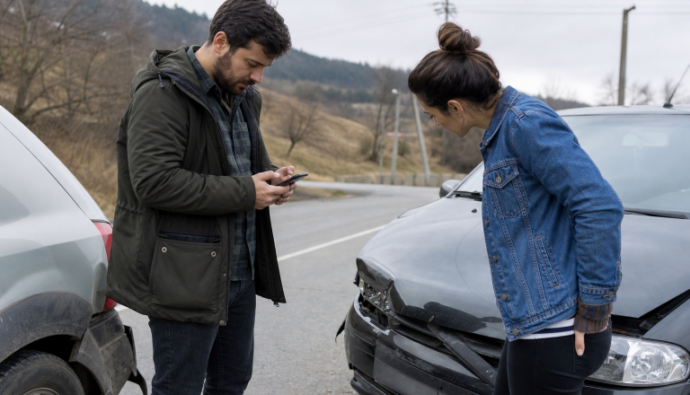
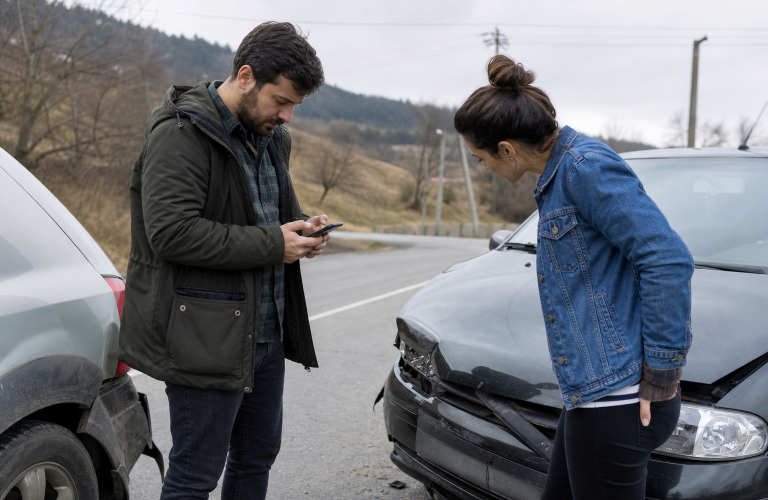
Image courtesy of MCT.

16 Responses to “Gas Tax Ignorance Revisited: Are Vehicle Mileage Fees the Answer?”

  1. Matt Says:

    The trouble with vehicle mileage fees and fuel taxes is that they tend to be highly regressive. It would hit poor people harder a) lower incomes b) poorer people often live farther away from city centers and have to drive further to work c) poorer people are more likely to drive older, less expensive cars which often get worse gas mileage than newer, more efficient cars.

  2. Rip Says:

    Ahem.

    a) In studying wether fees and taxes would affect low-income commuters, it was found that across all income levels, the choice of having pay roads and non was eqaully accepted because what people really wanted was choice. And as low-income commuters tend to ride public transportation more, even less congestion was a benefit for them at no cost to themselves.

    b) Poorer people tend to live closer to city centers as there is more rental units and mass transportation available than there are in suburbs. According to a 2007 Gallup poll, the average commute length was significantly lower for low-income workers than it was for other workers.

    c) Unless you are driving a car from the 70s or earlier, all typical light-duty cars have averaged over 20mpg with very little cariation since 1980. And you guessed it, cars form 2000s have slightly worse MPG than do cars from the 80s and 90s.

    http://www.gallup.com/poll/28504/workers-average-commute-roundtrip-minutes-typical-day.aspx

    http://www.upa.dot.gov/resources/lwincequityrpi/index.htm

    http://daily.sightline.org/daily_score/archive/2008/02/26/horsepower-vs-mpg

  3. Deacon Says:

    The problem with gas taxes and vehicle mileage taxes are they depend on the purchase of gas and the driving of the vehicle. When it becomes too expensive too drive people don’t and the revenues decline. It’s really that simple.

    Instead, why not tax the vehicle (all vehicle types) being bought by weight and emissions on a monthly / trimester / semester / yearly basis, in-conjunction with a gas tax reflective of actual cost not subsidized cost. All these vehicles use the road regardless of the drive train.

    So if you buy an electric vehicle, your tax is for the weight of the vehicle,

    If you buy a hybrid, your tax is for reduced emissions, weight of the vehicle and some gas tax

    If you buy a ICE vehicle (cars, trucks, minivans, big rigs), your tax is for emissions, weight of the vehicle, gas tax.

    This way the logic follows that every vehicle pays for the road they use and deteriorate. The weight tax can even be applied to current vehicles not only new purchases. A tax on the weight of the vehicle will ensure revenue even if the price of gas goes through the roof and everybody drives an electric.

    Buyers see the incentive to owning smaller cars, electric cars, hybrids, so the effect is positive across board.

    Emissions are reduced because people don’t want the added costs a normal ICE vehicle gets you, so the pollution problem gets a kick in the ass as well.

    The point of the argument from my perspective is that we need to reduce our use of oil, we need a better tax based revenue source for roads to be maintained. Weight is the only common denominator regardless of the vehicle type or propulsion type. Use a vehicle weight tax as the base tax and add to it a gas tax and emissions tax.

    I don’t know it makes perfect sense to me.

  4. Alon Levy Says:

    In the US, poorer people are disproportionately likely to live in the inner city rather than the suburbs and not to own a car. Despite the trend of more suburban poverty and less urban poverty, poverty rates in the inner cities remain far higher than in the suburbs.

  5. pete Says:

    A low income person with a local job will stay a low income person and use PT. A low income person trying to lift themselves out of poverty by getting a job in a higher income area will be penalized the most by this plan.

  6. Streetsblog Los Angeles » Today’s Headlines Says:

    [...] Is It Time for a VMT Tax? (Infrastructurist) [...]

  7. Quikboy Says:

    Do any of you who have commented actually lived in the suburbs? I live past the outskirts of Houston, in NW Harris county, and just as much as there are middle class and even upper class subdivisions, there are also just as many lower-income subdivisions. People who own a home in any of these subdivisions is probably 99.9% likely to have a car of some type.

    Also, taxing based on milage hurts those that NEED to commute to far places, like truck drivers, ranchers, delivery, etc. for their jobs. It even hurts those who have invested in vehicles for better gas milage.

    The usual gas tax is a much better idea. It encourages people to drive fuel-efficient vehicles that have lower impact on the environment, and won’t require expensive monitoring to see how far people travel.

  8. jay jay Says:

    This push for new mileage based taxes makes no sense to me. If you need more revenue, raise the dang tax. What is do hard about that? It has been whittled down by inflation. The way you fix that is to make the tax a percentage of the cost of the gas rather than a fixed fee per gallon as it is most places. If it gets too expensive and causes people to drive less, this is appropriate. Less road miles combined with less revenue is not a problem. The goal of infrastructure is to support the needs of society, not incentivize continuous artificial growth.

  9. Scott Says:

    @Deacon–

    The problem with taxing the vehicle instead of gas or miles driven is that it’s an up-front cost and therefore fails to provide appropriate feedback. The more you drive, the more you cost society in terms of road wear, congestion, pollution, etc. The more these costs increase per mile, the more likely people are to adjust their habits to be in line with the societal costs.

  10. Alon Levy Says:

    Scott, the effect of vehicle weight on road wear is much greater than the effect of VMT. Road wear is proportional to the fourth power of axle load. You cause more road wear driving a 3-ton jeep 200 miles a year than driving a 1-ton compact 10,000 miles a year.

    It’s the other costs where gas taxes are more sensible. Those are actually the vast majority of costs/externalities of driving: air pollution alone is worth about $2/gallon.

  11. Trey Baker Says:

    @ jay jay and Quickboy:,

    You both make excellent points, and the fact is fuel taxes are likely to remain the backbone of our state and national transportation programs for many more years. However, I would ask you how you intend to capture use of the roadway network by vehicles that do not run on fossil fuels at all? While electric vehicles are a long way from having a significant presence in the domestic auto fleet, the question still needs to be considered. Yes, it is certainly an option to simply assess them a higher vehicle registration fee, but would it not be desirable to develop a fee system that reflects use as opposed to some nebulous annual payment?

    Furthermore, as was noted in the comments on the earlier article, there are potential equity concerns with regards to relying on the fuel tax for sustaining transportation development. We here at the Texas Transportation Institute are looking at statewide vehicle registration data to see if we can identify any potential relationships between income and fuel efficiency. My initial hypothesis is that lower income drivers will be more likely to drive vehicles with a lower fuel efficiency rating, meaning that they are paying more on a mile by mile basis for equal use of the roadway network relative to the driver of a vehicle with higher fuel efficiency. While a VMT based fee would still be regressive with regards to income, it seems it would at least be less regressive than the current system (assuming my hypothesis is not refuted.)

    But as far as simply raising the gas tax…legislative prerogatives are outside of my research experience.

  12. Alon Levy Says:

    Electric vehicles cost $40,000 apiece, a figure which is unlikely to change in the near future due to the high price of batteries. They are a small market and will remain small. Even hybrids, which cost $22,000, are only about 3% of the US vehicle sales.

    In a regime where gas taxes do not include the externalities of pollution and carbon emissions, I’m perfectly fine with the few electric vehicles on the road paying nothing. An electric vehicle has positive externalities in such a case, namely that it avoids the untaxed negative externalities, and as such it’s economically rational to subsidize it.

  13. Chris Says:

    I see a combination of the gas tax, a VMT tax, and a car tax as the answer. While a gas guzzler driven for 15 miles may use more gas than a Prius driven 50 miles, the Prius driven 50 miles probably is a much greater contributor to traffic congestion. Both need to pay for the roads they use. A car tax levied on the value of the car can help offset the regressiveness of the other two taxes.

  14. James Says:

    Where do these people come from? WHO in their right mind wants a GPS device the WILL TRACK YOU!!! It has too. It has to log where and when you are for billing and dispute reasons. Im tired of nanny state from the warrentless wireing tapping of millions of peoples communications to the tracking of our vehicles. Be honest with yourself do you really think this wont be a violation of your privacy to have big brother in your car. Yes I know your on public streets and dont expect privacy that way BUT If someone tracks you all day every day thats stalking. Thats a violation of your privacy state. Ill be damned if Im going to pay for someone to spy on my where I go and when all day every day. Just raise the gas tax and stop subsidizeing buses and trains with the gas tax and maybe they would have the money they need. No need to make this all that extra complicated. Gas tax encourages efficiency, smaller cars etc. I hope everyone researches VMT tax befor they BEG for highier taxes and tracking of our movements just to tax us further. Seems like a command and control move to me.

    Also Notice how they always attack the people who are working, trying to get to work and back. They act like people LOVE sitting in traffic just for the Heck of it. Im sure most people are in traffic to go to work or back. How about they help us out and stop the damn tolling of everything and use the gas tax for road projects instead of subsidizeing the buses and trains and every other pet project they use it for. They collect the gas taxes and spend it on other stuff then say the drivers need to pay more. Im tired of these elites (Or so they think they are) seems like they just want us to get off their roads. Im so tired of these people railing against drivers. Automobiles have been the single greatest thing for everyone from the bottom to the top. It allows us to go where we want when we want and depend on ourselves. A true symble of freedom. It has allowed 1,000’s of low wage workers such as myself at one time to drive a little further and find a better paying job. No dependance on the bus or trains. These people need to be thrown out.

  15. James Says:

    Oh I forgot you people talking about carbon taxing are crazy. Please look up climate-gate. They have really scamed us. Look it up they are now admitting to glacier-gate now. Lieing about the melting glaciers are actually not. Dont take my word for it. There are now many criminal investigations going on now. The IPCC is a pack of lieing criminals scaming us to tax us. Look it up!

  16. dr2chase Says:

    (I ended up here looking for information about road wear, but…)

    James, the problem with building more roads, is that it just moves the congestion around to the next tight spot. Also, over time people adapt to the new road, and change their commuting, housing, and employment patterns to take advantage of the new capacity. I do agree that a gas tax makes more sense than a mileage tax, for all the privacy reasons that you give.

    I am ambivalent about the whole cars=freedom thing. Cars are expensive, and cars are dangerous to other people, and cars encourage physical sloth (to the detriment of our health), and when cars break (as they often do, especially if you are trying to get as much life as possible out of an old car — i.e., the frugal scenario) they are difficult to fix by yourself. I prefer bicycles; sensible bicycles, with sensible clothing for bad weather, and perhaps electronic assist for unusual distances or hills. When they break, you can fix them on the road, or tow them with another (sensible) bicycle, or merely push them along. When the road is out, you can ride around; when there is unsalted ice or unplowed snow, you can walk around. (But yes, I also drive plenty.)

    I wouldn’t get my hopes up about climate chance really being fraud, either. People make mistakes; I myself was co-author on a paper that (unknown to us, unknown to the peer reviewers) contained a fundamental error (data flow analysis with a non-monotonic step, accidentally hidden in a “renaming”, if that means anything to you), that did not have a major effect on the results of the overall paper (it could be fixed), and had no effect on the larger field at all. As a general rule, the organized lies tend to follow the money, and the largest money in this debate, is on the “humans have nothing to do with climate change, there is no climate change, climate change is good anyway, it’s too late, and you can pay us to fix it in other ways” side.

Post a comment: