


Posted on Thursday April 23rd by Jebediah Reed | 2,274

painting-roof-whiteIf there were such a book as “7 Habits of Highly Successful Planetary Civilizations,” one of those habits would be the ability to recognize and do simple things that substantially address complex problems–and to do so even if those simple things seem kind of silly at first.

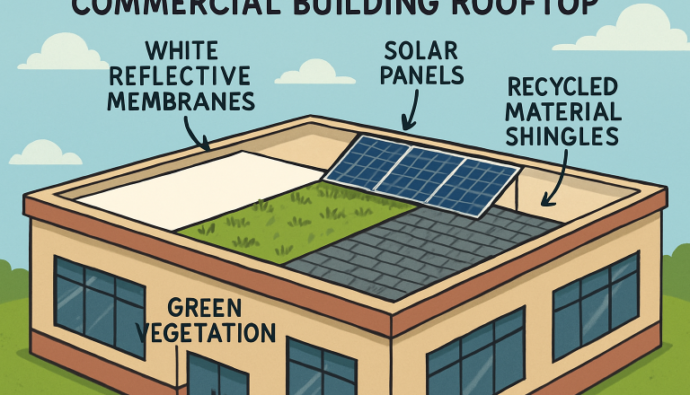
Case in point: an initiative to paint (or in other ways make) rooftops and paved surfaces white in urban areas. Sounds ridiculous compared to doing fancy stuff like installing CO2 scrubbers, creating global cap and trade markets, and shooting billions of tons of greenhouse gases into geological formations, right? But there’s some compelling evidence that it would make a very big difference in delaying the effects of global warming. That it could be done cheaply and easily isn’t really up for debate.

One of the main proponents of the idea is Hashem Akbari, a nuclear engineer at Lawrence Berkeley National Lab. More from this Miller-McCune article:

Akbari, along with Surabi Menon, another LBNL scientist, and Arthur Rosenfeld, a former LBNL scientist and now a California Energy Commission board member, claim that painting urban surfaces in warm parts of the world white or a light color could offset the carbon emissions of all 600 million of the world’s cars for 18 to 20 years — at a savings equivalent to at least $1 trillion worth of CO2 reductions.

This is not a hoax: Akbari, Menon and Rosenfeld are three of the country’s leading experts in their field, and their study published in the journal Climatic Change is backed by years of carefully calculated data.

They figure that painting 100 square feet of roof space white offsets the effect of one ton of CO2 emissions. So an American family of four could offset their annual carbon emissions with 8000 square feet of white space. If cities around the world lightened all their roads, parking lots and roofs, it “would offset 44 gigatons of CO2 emissions” — or about 18 months worth of emissions for the entire human family. Overall, the three scientists figure their plan could delay the effects of global warming by 11 extra years.

The idea has been around for a long time, but the three scientists have put some very compelling numbers behind it. The findings only add weight to arguments like the one made in a 2007 Business Week article that the money we’re spending on building solar capacity as a way to address climate change would be far more effectively spent on white paint for WalMart rooftops and Food Lion parking lots. It’s kind of threatening to the techno-fix “someday we’ll all be tooling around in tidal-powered Hummers” mentality that often drives the debate around global warming solutions, but I haven’t seen any arguments that take on the substance of it.

The stimulus bill offers a perfect opportunity to jumpstart the Great Whitening. It is about a shovel-ready (roller-ready?) as a project could be, and it would be cheap, labor intensive, and immediately beneficial in several respects. First, it would improve the planetary and local climate situations. Second, it would save building owners money on air conditioning ($2 billion a year in the US alone, the scientists calculate). Third,  the entire project would almost certainly cut peak electrical usage on the hottest days of summer, which really are the only times the capacity of the grid is tested. If white roofs cut total electric demand by, say, a few percent on those days, that would actually be enormous economic value both utilities and to businesses and consumers who would be less likely to suffer losses in a power outage, a la August 2003.

Certainly, the country could do a *lot* of whitening for $2 billion.

So: is anyone in Congress or at the Dept of Energy pushing for this? If not, why not? Hopefully it isn’t because John McCain would make fun of them in his Twitter feed as he did with Mormon cricket and beaver control initiatives.

Two questions do come to mind though:

* In general, spreading paint involves the release of a lot of greenhouse gases. How does that affect the overall calculus? And, is there a way to use a paint that doesn’t do this?

* Since white things tend to get dirty pretty fast in cities, how much would that lessen the calculated benefits. And how much water would be required to keep everything spic and span and high albedo?

But neither seems like a big deal. Let the Great Whitening begin!

56 Responses to “Why Doesn’t The Stimulus Include Money For Painting Roofs And Roads White?”

  1. Tim in Wisconsin Says:

    I have additional concerns:

    One, what impact would white roofs have in northern climates where heating in winter is a bigger concern than cooling in winter? For a good chunk of the country, additional electricity production in the winter would be required. Furthermore, people in general are far more concerned about how cold it gets in the winter rather than how warm it gets in summer, meaning that it would be difficult to convince people to do this.

    Two, I would be very concerned about how slick painted roads would be in the rain and how much of the sun’s glare they would reflect at certain times of day. I would guess that painted roads overall would be much less safe than unpainted ones.

    Three, in my experience it seems like most major road construction projects any more are concrete which is would seem to have a high albedo already. How much benefit would you get by painting an already lightly-colored roadway?

    Four, if you think light pollution is bad now, just wait until every horizontal surface is painted.

    While I applaud the unorthodox thinking, it just seems like there are a lot of issues raised with the effects of its implementation.

  2. admin Says:

    Great comments. As for road safety, clearly we couldn’t slap regular white paint on a road. But it would be quite possible to apply some form of light pigments to asphalt that it didn’t make it slippery in the rain. And true enough about concrete roads — they’re fine as is. But the overwhelming majority of roads are still asphalt (which is much cheaper).

    Obviously, the priority would be to do this first in hot places. But even in temperate areas the home heating issue is fairly minor compared to the overall benefits. It would be easy to subsidize for poorer families.

    Light pollution would be worse in cities, but again very minor consideration compared to the projected benefits of functionally removing 44 gigatons of CO2 from the atmosphere (though it wouldn’t help with ocean acidification, of course).

    -Jebediah

  3. admin Says:

    Meant to say as well: the road safety issue is one that would have to be taken very, very seriously. So the way to do this would be to start with rooftops and parking lots in places like Houston, Phoenix, Atlanta, etc.

    Roads would have to come further down the road, as it were.

    -Jebediah

  4. Tim in Wisconsin Says:

    I googled concrete albedo, and found some interesting info. New asphalt has an albedo of 0.05, which is really, really low. Aged asphalt as an albedo of 0.1. New concrete is between 0.4 to 0.5, while aged concrete is between 0.2 to 0.3 (I expected those numbers to be higher.) Concrete made with portland cement, however, has an albedo of 0.7-0.8. That’s about the same as white acrylic paint and much better than that of sea ice without snow on it. I wonder if there’s a way to increase the albedo of asphalt.

    I really see this plan only working in the suburbs. In the cities, the radically different roof heights and significant vertical faces of buildings means that a lot of reflected solar radiation would be absorbed instead of escaping back to space.

    I sound like I’m entirely opposed to the idea, when I’m not, really. I do like the idea of changing albedo without resorting to crazy schemes like releasing tons of gunk into the stratosphere. I just don’t think that we’ll get nearly the impact that they think we’ll get and there’s a whole host of issues that go along with the plan. But as low-tech band-aids go, it’s not bad.

  5. Matthew Says:

    New York City Mayor Mike Bloomberg talked about this on Charlie Rose two nights ago. The consensus seemed to be that Mayors are more likely to pass laws requiring white roofs, green roofs, efficient hot water systems, etc than congress because they deal day to day with the constituents.

    That being said, it’s really amazing that solar hot water systems, which can produce up to 100% of a buildings hot water needs, isn’t receiving more press. These systems generally have a 3-5 year payback, and the government can subsidize up to 45% of the total project.

    Our Company works out of New York City. Love to answer any questions about the technology! We’re quite friendly!

  6. admin Says:

    Thanks, Matthew.

    Good to hear that Bloomberg is on it. Personally, the only episode of Charlie Rose I’ve seen recently is this one:

    http://www.youtube.com/watch?v=LFE2CCfAP1o

    -Jebediah

  7. Toads Says:

    Won’t Michelle Obama, Rev. Wright, and Jesse Jackson say that this is racist?

    Don’t put it past them..

  8. hank Says:

    Why roads and rooftops?

    It would be vastly cheaper and more effective to increase the reflectivity
    of (say) an area of desert in a low-cloud, low-precipitation, high-sunlight
    area.

    But you miss the whole point. You seem to believe that the aim here is
    to improve the human condition. It isn’t. It is to force humanity to suffer for
    and to repent for and to cure their sinful consumerist ways.

  9. Kristo Miettinen Says:

    I’ve been pushing albedo modification of built-up areas (not necessarily by painting - alot can be done simply with choice of materials) in casual discussion with technically minded greenies since 1989, but have found few warming to the idea. I have reluctantly come to suspect that global warming, as an issue, is less about global warming per se than it is about wider lifestyle dictatorship. Simple solutions aren’t good enough, because they don’t warrant sufficient interventions in each other’s affairs. It’s not the problem that matters, but the solution - only the right solution will do.

  10. Phil Says:

    I lived in the Middle East for a while and in some of the poorer areas one technique to cool houses was to coat the roofs in a gypsum ‘wash’. This technique worked great, and during the hottest days of summer, decreased temperatures indoors greatly, on the order of 5 degrees C. This would likely get around the problems with CO2 release using standard paints. The problems raised though is that after repeated rainfall, it tends to wash away. If the application could be made more permanent, this might not be a bad alternative to paint.

    I suspect that with the general lack of sunlight (and intensity when we are lucky enough to have it) in northern areas during winter, the higher albedos won’t make that much of a difference in keeping houses warm.

  11. FL Mom Says:

    Ditto what Tim said about safety issues with reflective pavement. Even just walking on them could be hellish if all that sun is glaring into your face. I think white-white would just get dirty and gray anyway so maybe light gray, instead of white, should be the goal.

    I have another question: would a cityscape with majority white roofing adversely affect airplane and helicopter pilots?

  12. Jim Says:

    Tim,

    You asked, “…what impact would white roofs have in northern climates where heating in winter is a bigger concern than cooling in winter?” My guess is that if you’re far enough north for the impact on heating to be a big concern, your rooftops are likely covered with snow for a large fraction of the winter anyway. On average, there probably wouldn’t be much difference in albedo.

    Changing the albedo in sunbelt cities with large tracts of pavement, parking lots and flat-roofed buildings, though, sounds like it could have considerable benefits. Now, if we can develop photovoltaic paint, we’ll be set :-).

  13. gtex Says:

    “…what impact would white roofs have in northern climates where heating in winter is a bigger concern than cooling in winter? For a good chunk of the country, additional electricity production in the winter would be required. Furthermore, people in general are far more concerned about how cold it gets in the winter rather than how warm it gets in summer, meaning that it would be difficult to convince people to do this.”

    Ummm….aren’t the roofs of most buildings up north covered with snow during many days of the winter? Sure, not every day from the first day to last day of 60-degree weather, but during the peak of the heating season???? So the loss of potential winter-time solar energy input to buildings with white roofs may not be a great as you first think. Also, on cold, clear nights when the roofs aren’t covered with snow, will a white roof radiate less heat energy to space than a dark roof, thus SAVING on heating costs?

    Just wondering….

  14. frege Says:

    This is like the reductio ad absurdum of global warming hysteria.

  15. Leroy Ormond Says:

    “White” is neocon code for “black.” You are a racist bigot.

  16. Shannon Love Says:

    The big down side to this, and probably a show stopper, is blinding glare from everything painted white except for flat roofs.

    Driving down a white painted road in the America southwest would be impossible. It would be like driving into a search light. Slanted roofs would also reflect a lot of light down to ground level. Parking lots would turn into solar furnaces.

    This is the kind of fix that I like but I think this one looks better on paper than in practice.

  17. Mark Turner Says:

    You would think the Obama administration would be all over a good whitewash.

  18. PapayaSF Says:

    Interesting idea, cheap and elegant, but I wonder about the environmental effect of all that paint as it inevitably wears off and blows or washes away.

    As for asphalt roads, might there be a way of adding a topcoat of crushed stone of a lighter color?

  19. Engineer Guy Says:

    Major advantages include the ability to implement this incrementally - you could do the roof of the local high school and gym next week without having a solution in hand for roadways. And you could do a lot with a starter budget this year, and do more next year as money was avaiable, rather than having to build a billion dollar super solution all at once.

    If the reduction in air conditioning costs are as great as indicated, that should encourage implementation in the sunbelt (for example, my electric usage in Houston during the summer months is 3X the winter baseline rate).

    Many suburban communities have restriction on roof colors (usually shades of grey/brown) for appearance sake. These would need to be changed (there is a bill in the Texas legislature right now to encourage home solar, and one of the sections of that bill overides local prohibitions on rooftop solar gear).

    There are also regular roof shingles made now with enhanced reflective properties. It would probably be easy enought to include these in building codes for new construction.

    If the Feds want to get involved, there must be 5,000 post office buidlings - one would think a significant number (50%?) could be done by year end as demo projects.

  20. DaveinPhoenix Says:

    We’ll need white tires to keep the white pavement from being turned black.

  21. George Says:

    “One, what impact would white roofs have in northern climates where heating in winter is a bigger concern than cooling in winter?”

    In Northern climates in winter it is dark for most of the 24 hour day. A black roof acts as a more efficient radiator to radiate heat out of the house and into space. The couple of hours of heat you get from when the sun is high enough to make a difference in winter is more than offset by the additional loss when the Sun is lower or has set. Also, coatings containing microscopic ceramic spheres that act as additional insulation are available. Hy-Tec is one vendor of these insulating coatings that I found in my study of this and others makers are available, too. I have been advocating this for literally years and am very glad to see something published on it!

    Also, in winter in the North, many roofs are covered with snow so they are white anyway. But that black roof still makes for an efficient transfer of heat from the roof to the snow and aids in melting. A roof with an insulating white coat will keep the heat in (a white coating reflects heat IN as well as reflects heat away … the side of the coating against the shingles is white too!).

    The only problem I worry about is that it might work TOO well. Many of these coatings are more reflecting than ice. Hundreds of acres of roof space especially at low latitude is the environmental equivalent of hundreds of acres of ice. If it caught on too much, we might reflect so much light back into space that it could cool things too much. Maybe making things as reflective as a natural surface such as grass or trees would be better. We don’t want to reflect too much away or we could actually cool things too much. The impact of this would be greater at low latitude (in the South).

    But the major thing is that it is estimated that this could reduce urban heat island temperatures in places like Los Angeles by a degree or two. This represents a tremendous energy conservation in electricity saved from inside climate management.

  22. ajm Says:

    Sounds like a good application for “self-cleaning materials”:
    http://www.sciam.com/article.cfm?id=self-cleaning-materials

  23. JorgXMcKie Says:

    G Harry Stine, back in the 70s or 80s pointed out the amount of excess heat generated by living in a mechanized world. I.e. the friction in the machinery that is used by humans was/is generating quite a lot of heat. His solution back then, which would seem to fit for Global Warming today, was to cover Texas with aluminum paint. (He didn’t care for Texas much, I guess.)

  24. rasqual Says:

    Heh.

    This actually represents a good market for offsets. Plant a forest? Why? Just go paint a parking lot!

    In fact, if the stimulus or Obama’s civil corps went a-paintin’ without offering credits for sale, it’d be like burning an asset with no return.

    ;-)

  25. SamIam Says:

    Doing this is a non-starter because the human-caused climate change hoax is about politics (power) and wealth transference, and this “solution” doesn’t meet the criteria.

  26. Homer Says:

    In Florida limestone is used as the stone aggregate in asphalt, only because it’s cheaper than trucking in something like bluestone; it takes a couple of years, but when the asphalt binder erodes what’s left is a road surface lightly colored enough that we have to add black lines to the white ones to provde enough contrast between the two. I have no idea what the albedo of several-year-old Florida asphalt is, but I’m sure it’s a lot higher than either new asphalt or asphalt elsewhere in the country.

    I noticed when I replaced my roof after the hurricanes a few years back, using very light gray, almost white, shingles, my AC bill dropped about 20% (the shingles which were replaced were medium gray, and had darkened with age). A friend in the roofing biz says he sees similar results from very light colored standing seam metal roofs, and my father never tired of recounting how much difference it made in the summer in our old Virginia farmhouse by painting the metal roof with highly reflective aluminum paint. It would seem that the greatest benefit from painting roofs white would come in a warmer climate - Florida, Texas, Louisiana, Arizona, southern California, etc. so why not start there?

    And, if my experience is typical (I don’t know that it is), and there is a 15% - 20% savings possible from changing the roof color from gray to white, why haven’t business owners in the warm, sunny states already done it? Why do we need the brain dead idiots in government to facilitate such savings?

  27. Koblog Says:

    No. No. No.

    First, you quit drinking the Kool Aid.

    Then you have to prove that a gas all living creatures breathe out and that plants require for them to live is bad.

    Then you have to prove there is “Global Warming” in the first place.

    Then you have to prove that such warming is bad.

    Then you have to prove that whatever CO2 production human activity creates is even close to what active volcanoes and other natural processes generate.

    Then you have to make up your mind: is it “Global Warming” or “Climate Change?”

    Then you have to prove that the Earth’s climate is naturally static and any changes need to be addressed by painting things white.

    This whole manufactured “crisis” is lunacy.

  28. Bill Brodie Says:

    Kristo Miettinen said:

    “Simple solutions aren’t good enough, because they don’t warrant sufficient interventions in each other’s affairs. It’s not the problem that matters, but the solution - only the right solution will do.”

    Bingo! I think Kristo has nailed it. Global warming has become such a huge (and lucrative - e.g Al Gore), politicized ideological campaign that there is no tolerance by GW priesthood for rational discussion/dissent (see Koblog comment) or micro-solutions.

    Improving rooftop reflectivity would not feed the priesthood. Cap’N Trade, however, will suck enough money to keep the ideological parasites well-fed for a while … until the host organism dies.

  29. Crevek Says:

    You guys are just trying to negate actual progress with your science of painting things! The only way for global warming to stop is for every last person to live like they’re on the Serengeti!

    This idea would hurt way less than strangling the few industries that know how to make money, but it wouldn’t ‘feel’ as green; Feeling green, feeling like you’re making a difference, is the whole point of all of this crap. Well that and terrorism against un-unionizable big business…

  30. Leon Says:

    In the climate change religion, the solution is simple: outlaw the manufacture and usage of any roofing material in colors other than gray and white.
    If it works with incandescent bulbs, it’ll work here.

  31. John Says:

    I assume that these “genius scientists” did not bother to ask any roofing contractor (one of the great unwashed without a Harvard PHD) about this. If they had, they’d have found out that aluminum roof coating, that dries bright silver, has been around since the beginning of time.

    The simple fact is that sun;light is the arch enemy of most roofing materials, so coating the roof (large flat ones) wit reflective material is standard procedure to lengthen the life of the roof. Torch down rubberoid is now the most common flat roof material. Its fact sheet tells you clearly to coat it with aluminum roof coating on 5 year, or less, cycles. The hotter the clime the more often you coat.

    Before rubberoid, the most common flat roof surface was built up roll roofing (essentially heavy tar paper). After that was applied, using tar, a thin layer of fine, bright, gravel would be applied, to a light tar surface for bonding, to reflect the sun and protect the roof. That is not as common today, as silver roof coating is cheaper and easier.

    Roll roofing also comes coated, like standard roof shingles. The reason for that gravel like coating is to repel sun, Coated roll is usually used of low pitch surfaced.

    As for more northern areas, the reflective coating is of little consequence for heat retention in the winter (for large flat roofs mentioned in the article). The simple fact is that a LARGE surface is exposed to the cold air, and buildings like big box stores, etc, don’t have that much, if any insulation in the roof. The foam that may or may not have been applied over the corrugated metal only has moderate R value.

    For homes, insulation, with a proper vapor barrier, means a heck of lot more that the color of a roof.

  32. ZEUGS: Die USA sollen weiß werden, Obamas Morde und die Stargate-Synchro « USA Erklärt Says:

    [...] von Gegenständen) Entsprechend fragen jetzt einige Leute, warum der Kongress nicht etwas Geld für weiße Farbe locker macht, wenn er es schon mit vollen Händen ausgibt. Für eine Milliarde Dollar, so das [...]

  33. Boghie Says:

    John hit it on the mark…

    The assumption of the article is that reflective material and technology is not currently used. It is. I look out of my window in SoCal and note that the roofs are light colored and likely selected with their reflective properties in mind. Like John stated, you don’t have to be a Harvard PHD to want to stay cooler in the summer.

    As far as a highly reflective surface (high glare) being used, think of the problems it will cause aircraft. Thus, even flat roofs should not use ‘mirrored’ surfaces.

    A nice middle ground could be found - and, probably has in SoCal.

  34. AST Says:

    This solution would be too easy. Like dumping iron filings in the ocean to stimulate phytoplankton blooms, it would have to be opposed by environmental groups because it would cause all their fundraising to dry up. They thrive on fear, and have become such large businesses in their own right, that they can’t afford to solve the major problem they warn about.

    The March of Dimes was organized to find a solution to polio. When the solution was discovered and the threat of polio abates, the MOD didn’t declare victory and disband, it chose a new threat to campaign against being careful to choose one that could be solved by something as simple as developing a vaccine, birth defects. Thus newly repurposed, the MOD will always be with us, as will some sort of dire environmental catastrophe. Global Warming has already been changed to Global Climate Change and since that includes either warming or cooling, an easy solution has already been taken off the table, since nobody really knows how mankind causes or can undo it. They’re keeping it vague for a reason.

  35. dunc Says:

    The costs of covering as much surface area as roads would be huge. Obama budget huge. And it would have to be incurred on some kind of semi-annual basis as cars driving on the surface and weathering will wear the surfaces away.

    Also, what Homer says is true everywhere. Black top roads are not actually black for their whole lifespan. Only at the beginning and then traffic wears off that top layer of asphalt. Overall they mirror more the color of the rock that makes it. Look at your local road, most likely it looks gray. Painting roads or any other costly additive will negate the whole point of asphalt surfacing (is this the real issue?, the evil oil usage?) in the first place and that is a cheap method of making an easily navigated surface.

    Boghie and John are also correct in their assessment of the roofing area. Most areas of the world that would see actual benefits from this already employ it.

    Want to do something smart? Educate, then let the free market take it’s course. And quit looking for practical solutions from an institutionalized jackass in an ivory tower that seems more keen on forcing others to do their will than actually helping people.

  36. anonymous Says:

    As for winter heating, one could probably apply a removable sticky white film or sheet (stick so that it doesn’t blow around in a storm) during the summer instead of white paint, and remove it in the winter. It would certainly be more work than white paint and probably more expensive as well, but it could be an option for those legitimately concerned with heating costs. Below a certain latitude, though, heating is not an issue.

  37. The Plucked Chicken Says:

    I Might Believe They’re Serious about Human-Induced Climate Change When……

    …. when I see this coming to every American city and town
    south of the Mason Dixon Line. Until then, it’s just a convenient
    crisis for advancing a political agenda. Even then, I’d like to see the
    data. The real data — not showing that the clima…

  38. Uncle B Says:

    You Southerners are in for a treat! New printed sheets of photovoltaic cells will soon reach your stores, and you will be able to get most your power from the sun. Some of you, the poorer, will modify your electrical demands by insisting on the new solar powered refrigeration units available, some of you will do more microwave cooking, some will install solar hot water systems, and some will get off-grid completely, and have excessive money to play with! But most of all, you are ahead of the darker part of the North American continent, Canada, for example, and are able to help yourselves on an individual basis to the new, free, perpetual, or renewable, if you prefer, power source, untaxed (as yet) and unregulated, take all you can! Don’t worry about global warming, if it were a real threat, the underground fires in Kentucky coal mines, and the Preventable C02 in Uzbekistan http://englishrussia.com/?p=1830 can be seriously approached by “Big Government”, and the jack-asses that rail against the individual consumer as a cause can take a lesson in the matter of scale from this also! In the meantime, understand that the Americans (us) will soon not be able to beg, borrow, steal, or blackmail, the large amounts or world resources we are accustomed to, and must look to alternate sources - Solar, Wind, Wave, Hydro, Tidal and Geothermal are the currently popular and safe power sources. Small reactors, being built in New Mexico, and Toshiba, Japan, exist, but are unlicenceable, fission disasters, waiting to happen, a last, but likely resort for a hungry America, but very dangerous!

  39. Michael Says:

    Phoenix already has white roofs because it does work. There are areas of Phoenix that are heavily treed, and in those areas temperatures are much cooler requiring minimal air conditioning in the summer. There are types of large trees that use minimal water. As this article shows, we need to think about everything, and what works will vary by location. Conservation is the biggest 1st step.

  40. Leaderboard for week of 5-4-2009: Timing matters | BeatBlogging.Org Says:

    [...] this blog post, Reed asks a thought provoking question, “Why Doesn’t The Stimulus Include Money For Painting Roofs And Roads White?” Painting black surfaces like rooftops and parking lots white could save at least $1 trillion [...]

  41. Kazys Varnelis Says:

    Great post, Jeb.

    Frankly, it’s insane not to do put silver coating ( for ex.: http://www.gardner-gibson.com/linedetails.aspx?id=57) on flat roofs.

    If you’ve ever see tar roofs bubble under heat, you’ll notice that after the bubbles rise, they pop. At that point the integrity of the roof is violated and its a matter of time.

    Roofs are not cheap from an owner’s perspective. Silver coatings will prolong the life of the roof significantly. New roofs are not environmentally friendly either. This is a sensible idea from every perspective.

  42. Glad We All Agree White Roofs Are A Great Idea — Now Let’s Use Stimulus Money To Make It Happen! » INFRASTRUCTURIST Says:

    [...] you may have read about here, a recent scientific paper has suggested that lightening roofs and paved areas in urban areas [...]

  43. MIA NONY Says:

    HELIO-PHOBIA: FEAR OF THE SUN.
    WHITEWASHING: WHAT A WASTE OF THERMAL MASS!
    INSTEAD OF THIS ADMINISTRATION CAPITALISING ON THE NATURAL SOLAR GAIN TO BE DERIVED FROM GAZILLIONS OF ROOFS EVERYWHERE, SIMPLY BY SHIFTING SOME OF THE COST AWAY FROM UPGRADING THE NATION’S ELECTRICAL GRID & TOWARD CONVERTING SOLAR GAIN INTO USEFUL ENERGY, YOU ARE BEING TOLD TO WHITEWASH ROOFS?
    WHY ISN’T THE US GOVERNMENT SUPPORTING & SUBSIDISING RE-ROOFING THE NATION WITH ENERGY EFFICIENT SOLAR SHINGLES, &/OR USING ROOFS AS NATURAL SOURCES OF SOLAR HOT WATER HEATING & SOLAR ELECTRICAL? INSTEAD WE ARE TO THROW AWAY ALL OF THAT SOLAR OPPORTUNITY & INSTEAD THE WORLD’S OIL PRODUCT ROOFS GET A WHITE WASH? IF EVER THERE WAS A SHORT SIGHTED, SHALLOW, COSMETIC, SHORT TERM THINKING SUGGESTION, THIS SOUNDS LIKE IT. GIVEN COLDER WINTERS THAN EVER, IS THIS EVEN ENVIRONMENTAL? OR IS IT YET ANOTHER CASE OF TUNNEL VISION, AT THE TIME IT SEEMED LIKE THE THING TO DO TO ENCOURAGE PEOPLE TO SHIFT AWAY FROM A FUTURE OF SOLAR ROOFS FOR SOLAR HEATING, SOLAR COOLING/SOLAR HOT WATER/ETC?

  44. Kit Says:

    The white roads thing is actually a fairly bad idea. While good environmentally, it’s impractical in the least. Sunny days, especially in those places of either high altitude or those closer to the equator, will be miserable for anyone who has to get anywhere near a road. I am also unsure if this would be safe if there was snow on the ground say.

  45. blah Says:

    I am sorry if this was mentioned before. Has the cost/benefit of production of painting these surfaces been looked at? I have found that from time to time certain “green” ideas, although great in concept, cost more energy and resource than they reap. If this is not one of those it sounds great. BTW I am a believer that this is a problem but that we can creatively counteract the coming crisis. I don’t think that all humans are as dumb as some of these comments.

  46. Cliff Says:

    I agree, blah… this seems like a good idea, but how much energy is used and pollution created by manufacturing all of this paint? And to that end, stop blaming the environmentalists for promoting this agenda… follow the money. Look at the paint companies!

  47. Diego Ripley - Interesting Articles – Week 1 Says:

    [...] Why Doesn’t the Stimulus Include Money for Painting Roofs and Roads White? ← Eight Awesome Hardware Twitter Hacks ← Back Home [...]

  48. Demolished! 11 Beautiful Train Stations That Fell To The Wrecking Ball » INFRASTRUCTURIST Says:

    [...] Why Doesn’t the Stimulus Include Money For Painting Roads and Roofs White to Fight Global Warm… [...]

  49. What does Green Mean? » Reach of the Blind Eye Says:

    [...] other great links on that page, as well. [...]

  50. lavonne Says:

    No-VOC paint would be a very important requirement if this is done large-scale. Otherwise, it would be business as usual: solving one problem by creating several more.

    Also, I agree that white roads would be a horrible idea for safety reasons. Roofs, yes — roads, no. Better to spend that money repairing our rail system and getting people off the roads altogether.

  51. J - Pacha Mama Says:

    Roofs, like windows, need to be selected for regional-compatability. As a Florida resident, when faced with the decision of a new roofing material, we chose WHITE shingles for their ability to keep the relentless regional sun/heat deflected off of our home and reduce our cooling costs. White colored shingles are the only Energy-star rated shingles available. Yes, there are greener roofing options, but they weren’t in our budget. For most people, reducing their environmental impact is more realistic that eliminating it altogether. The roofers warned us that white shingles won’t look “clean” as long as dark colored ones. If anyone wants to comment on the cleanliness of my shingles, then phooey on them.

  52. Jill Says:

    After many years working as an energy-efficiency and renewable energy advocate in the Midwest, this year I started my own company painting flat black roofs white in the city of St. Louis, where I live. It doesn’t take a lot of financing to get started, but federal stimulus money definitely would help make things happen faster and on a larger scale, which is what’s needed to really have an impact in my community. ARRA funding is available for energy efficiency, but it’s not easy to tap into.

  53. It’s Time For Climate-Friendly Concrete Roads » INFRASTRUCTURIST Says:

    [...] we wrote about here and here, a trio of well-regarded scientists have argued very persuasively that all the dark [...]

  54. Concrete: More expensive, but Climate-Friendly | Urban Living in California Says:

    [...] we wrote about here and here, a trio of well-regarded scientists have argued very persuasively that all the dark [...]

  55. M LaSarge Says:

    We have been using aprox. 5000 square feet of latex based white ceramic insulating paint on our shop roofs in Mobile, AL for over 10 years now. We have removed the insulation from the underside of most of the area because the racoons moved into the insulation, and have never had to reinsulate. The underside of the metal roofs remain cool. We also installed aprox. 2500 square ft directly on a prestressed concrets roof. With Its mass, that building always stays relatively cool in hot weather. Believe whatever you want about the environment, but that stuff saves us a lot of money and greatly improves employee comfort. Much better return than buying stock!
    I also painted the shingles over my back porch at home because the radiation from the underside of porch roof was so bad in the afternoon you couldn’t sit back there. Now it’s like sitting under a tree in the summer on that porch.
    We got used to the briteness after several days, and now never even notice it. It’s no worse than snow on the roofs up north.

  56. gene nordell Says:

    perhaps if we did really look at albedo changes IN TOTAL and added WASTE HEAT EMISSIONS we might find CO2 is not even in the running for agw!

Post a comment: