
[SButtonZ button="digg"]
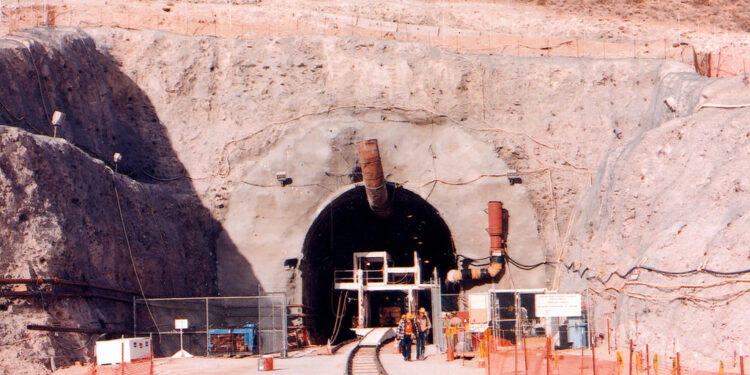
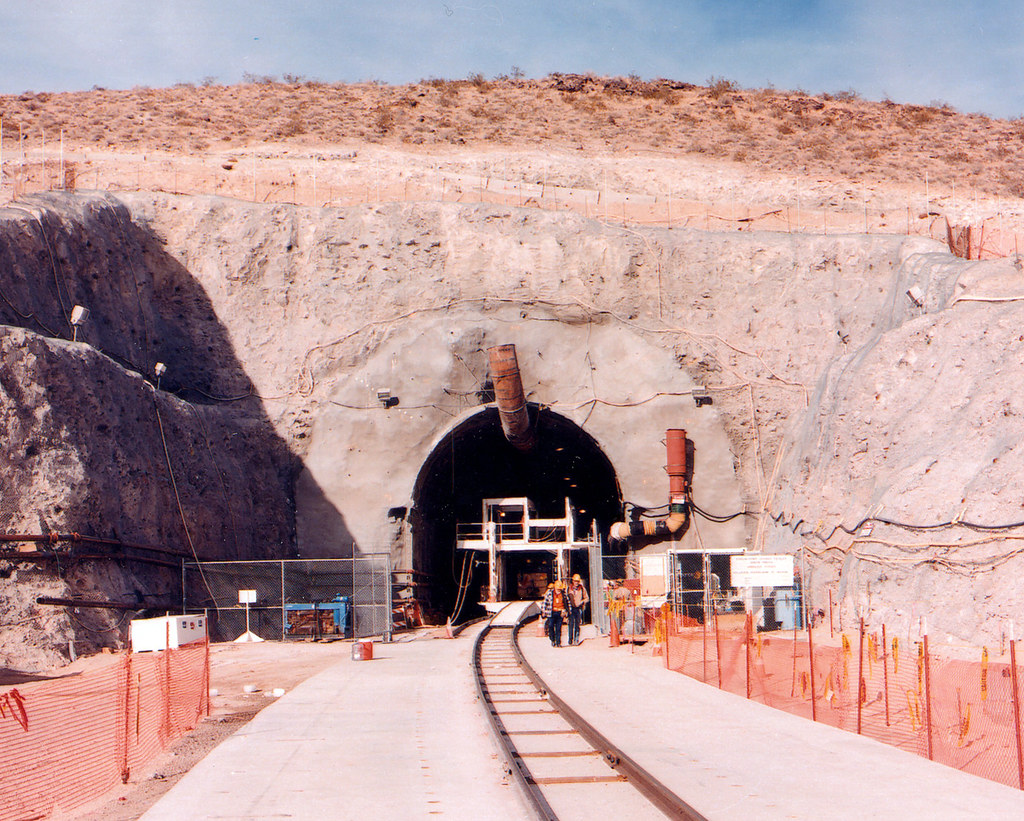
“White House Buries Yucca,” read the headlines after the Secretary of Energy Steven Chu told a Senate hearing that the Nevada repository is “no longer an option” for long-term storage of nuclear waste.
Instead, Chu said, the Obama Administration will be content to allow spent fuel rods sit in storage pools and dry casks for an indeterminate period. Meanwhile, the administration’s proposed 2010 budget calls for scrapping all spending on Yucca altogether “while the administration devises a new strategy toward nuclear waste disposal.”
The decision was celebrated by Harry Reid, who bragged to readers on his website, “It was very easy working with the Obama Administration to bring about these cuts. This project is dead, and this announcement is another indicator that our efforts are paying off.” It was also gratified anti-nuclear activists, who have long seen Yucca Mountain as a choke point at which they can cut off all nuclear development. Greenpeace immediately called for the administration to cancel plans for new construction and begin plans to close existing reactors.
Supporters of nuclear, meanwhile, found themselves completely flummoxed. At the hearings, Senator John McCain, who supported nuclear during his presidential campaign, said the decision imperils the current nuclear revival.
But is this really true? The cancellation of Yucca may not be nearly as bad for the budding nuclear renaissance as it might first seem. In fact, it may provide the opportunity to prove once and for all that, in reality, there is no such thing as nuclear waste.
First of all, lead-lined dry cask storage, developed since Yucca was conceived twenty years ago, has emerged as a viable interim solution that can accommodate untreated spent fuel rods for at least 75-100 years. Even Alison McFarlane, the MIT geologist who fed Al Gore the line that “nuclear reprocessing only makes things worse,” admits “there’s no need to rush into geological solutions right now.”
But the real opportunity here is to reexamine the idea that spent fuel rods can only be buried in the first place. The whole concept of “nuclear waste” only emerged after President Jimmy Carter abandoned the reprocessing of spent fuel rods in 1977. France went ahead with reprocessing and now stores all its high-level waste from 30 years of producing 75 percent of its electricity in one room in Le Hague.
When you consider the content of a spent fuel rod, the idea of building 60 miles of underground tunnels to isolate if from the world seems almost ludicrous. Ninety-five percent of a spent fuel rod is plain old natural uranium-238, the non-fissionable variety that exists in granite tabletops, stone buildings and coal plants (which emit 100 times the radioactivity of nuclear reactors without being regulated). U-238 has a half-life of 4.5 billion years, is only mildly radioactive and could be put right back in the ground where it came from.
Of the remaining 5 percent of a rod, 1 percent is fissionable uranium-235, which can be recycled as fuel. Another 1 percent is plutonium, also recyclable as fuel. Then much of the remaining 3 percent has use as medical and industrial isotopes. Forty percent of all medical procedures in this country now involve some form of radioactive isotope and nuclear medicine is a $4 billion business. Yet we must import all our tracer material from Canada because all our isotopes have been headed for Yucca Mountain.
In fact, Yucca was never anything but a colossally misguided effort to cover up the mistake of abandoning nuclear reprocessing. What’s needed is to revive the recycling effort. Areva, France’s nuclear giant, is already preparing to reopen the facility at Barnwell, South Carolina, that the Carter Administration closed down. We already get half our current reactor fuel from old Soviet weapons, thanks to France’s recycling effort. Why not start employing the technology in this country?
So shed no tears for Yucca Mountain. Its demise may be the best thing that’s happened yet in the nuclear revival.
William Tucker has written about environmental and energy issues for twenty-five years. His work has appeared in Harper’s, The Atlantic, National Review, New Republic, The New York Times, The Wall Street Journal, and many other publications. His most recent book Terrestrial Energy (Bartleby) is about nuclear power. He is a regular guest contributor to The Infrastructurist.
Tags: ENERGETIC ARGUMENTS


this article is good. i want to know what other people think.
i;m always on the fence about nuclear… so many people seem to think its so terrible, but i never really hear any concrete arguments beyond, bad consequences if meltdown and bad to store things for many year…. i like this post, what say others?
i think the use of percentages and the way they are mixed up and applied to different fields makes for a very vague argument. it’s convincing because everything works in his favor.
also, anytime an article has MULTIPLE grammatical errors I immediately doubt the authority of the author. I think that’s inexcusable when writing an article for a paper/website/whatever.
Xandre -
I appreciate your purism with respect to grammar. One thing to keep in mind though is many news websites, particularly those of smaller scale, don’t have copy editors. Which means we tend to have more typos than, say, consumer magazines or newspapers, which generally have many more people involved in the editorial process, including copy editors.
Getting perfectly clean copy is an admirable task, but also quite labor intensive. We try though, and we appreciate your understanding when don’t quite hit the mark. [sic]
-Your faithful editor
[...] was alerted to the existence of this room by a single sentence in an article on Infrastructurist about the closing of the Yucca Mountain facility. The author of that article, [...]
As a resident of Nevada, I was always against the Yucca Mountain Project. Who wants this stuff in their yards and on the roadways where their kids play and ride the bus to school every day? I was even a little apprehensive about the nuclear program itself, but saw the importance of alternative energy sources. After research though, I am a big supporter of the nuke industry. Look at 3 Mile Island vs Chernobyl. It’s all about the work people are willing to put into safety and efficiency. I support cutting Yucca Mountain and recycling fuels and environmental matter while still asking, what’s the cost vs efficiency? Any Ideas on this, Editor?
Will
Great articles and insights
Excellent. Very nice piece. I was surveying the aritcles on the closure and yours stood out because it reflected exactly what I was alone in thinking– until now. You’re absolutely right. NOW, the thing is.. to get reproccessing going again… AND educating dumbed down duped American citizens about the need for nuclear and how safe the technology is with the latest reactors and the proper regulations and controls.