
Posted on Thursday March 5th by Joe Cortright | 441

U171574INP

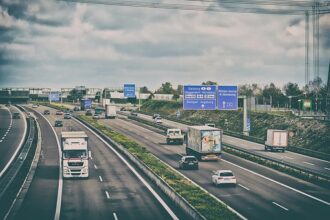
Last year, the US made more progress in reducing traffic congestion than any other time in memory. New data show that in the nation’s cities congestion declined by 30 percent overall and was improved at every hour of the day.

How did we make these big gains? Not by adding more highway lanes or transit. Our physical infrastructure barely changed. Rather, we did it with a very modest decline in car travel. On urban interstate highways, total vehicle miles traveled in the US declined by about 3 percent compared with 2007.

The dramatic decline in congestion — which analysts have labeled “startling” – was almost universal. It actually fell in 99 of the nation’s 100 largest metro areas, according to Inrix, which monitors traffic around the nation. The company’s data come from tens of billions of reports from GPS-equipped vehicles traveling the nation’s roads, the same data that provides real-time traffic information to commercial users and web-services like Mapquest, Garmin and On-Star.

Their key conclusions: “peak hour congestion on the major roads in urban America decreased nearly 30% in 2008 versus 2007*,” and nationally, “congestion was lower every hour of every day in 2008 versus 2007 – between 15% and 60% lower depending on the hour and day.” (See the full report here.)

How did such a small decline in travel produce such a big drop in congestion? It’s well known that traffic congestion is subject to a tipping point–what economists call non-linearities. Add an additional car to a crowded road at rush hour, and traffic slows down a bit, and then the “carrying capacity” of the road declines. Traffic engineers estimate that most roads carry their maximum throughput — number of vehicles per hour at about 40 miles per hour — so as traffic slows below that speed, the road actually loses capacity and goes slower and slower, producing a traffic jam.

But the same is true in reverse. Take a few cars off the road at rush hour, and traffic moves faster, and highways can actually carry more vehicles. And in every large American city, that’s exactly what has happened in the past year.

As the Inrix study concludes, “When a road network is at capacity, adding or subtracting even a single vehicle has disproportionate effects for the network. This phenomenon has been well known for a long time, but this data illustrates it in real-world terms on a nationwide basis.”

This natural experiment has an important implication for transportation policy. Reducing car trips at the peak hour–transportation demand management–can cut congestion and make travel faster for everyone else. In effect, over the past 12 months, we’ve implemented demand management through the combination of higher gas prices and a weaker economy. But we could just as effectively–and more efficiently–accomplish the same purpose with other policies, especially variable road pricing.

It’s worth thinking about how much less expensive this would be than building more capacity. Imagine how many tens or hundreds of billions it would cost to reduce congestion by 30 percent by building new roads.

There’s a huge free lunch of additional carrying capacity in our road system that could be used if we managed demand slightly better. Currently, we ration traffic capacity the same way the old Soviet Union rationed bread–by having everyone wait in line. It’s a wasteful way to allocate bread, and it’s a wasteful way to allocate scarce road space at rush hour. Pricing the roads to reduce peak volumes even slightly–by encouraging those with flexible schedules to take the trip at some other time, go by another mode, or forego the trip altogether–makes the system work better for everyone else and actually increases its capacity.

The technology for implementing road pricing is already in hand and has been implemented around the country through “fast pass” electronic tolling. Large scale demonstrations of road pricing have had a significant effect on congestion in London and Stockholm.

If we truly want to have a smart transportation system for the 21st Century, we’ll see the lessons of the “tipping point.”

Joe Cortright is an economist with Impresa, a Portland consulting firm specializing in economic analyses. He is the chief economic analyst for CEOs for Cities, a national organization of urban leaders.

21 Responses to “Why American Traffic Jams Are Like Soviet Bread Lines”

  1. Streetsblog » A Proposal: Stimulus for Passenger Rail in Montana Says:

    [...] Elsewhere around the network, the Orange County Transit Blog details forthcoming service cuts, The Infrastructurist explains how American traffic jams are like Soviet bread lines, and Making Places reports on [...]

  2. Streetsblog » A Proposal: Stimulus for Passenger Rail in Montana Says:

    [...] around the network, the Orange County Transit Blog details forthcoming service cuts, The Infrastructurist explains how American traffic jams are like Soviet bread lines, and Making Places reports on [...]

  3. Paul Steely White Says:

    Great post! we here at T.A. made a similar analogy a few years back.

    http://www.transalt.org/newsroom/media/1072

    Nearly half the traffic in Park Slope is created by drivers cruising around for parking spots due to jam-packed curbs, according to a new study unveiled yesterday.”What we have now is the equivalent of a Russian bread line,” said Paul Steely White, executive director of Transportation Alternatives, the advocacy group that conducted the study.”Except instead of bread, it’s parking, and instead of peasants standing in lines, we have cars circling the block,” White said.

  4. Chris Miller’s Blog » Blog Archive » Linkdump for March 5th through March 8th Says:

    [...] Peak hour congestion on the major roads in urban America decreased nearly 30% in 2008 versus 2007 - example of non-linearity in a complex system. 3% less driving led to 30% reduction in jamstags: infrastructure traffic culture statistics Leave a Reply [...]

  5. The FREAK-est Links - Freakonomics Blog - NYTimes.com Says:

    [...] breadlines were depressing and long — so it’s a bad idea to use them as models for managing traffic. [...]

  6. The FREAK-est Links - Freakonomics Blog - NYTimes.com Says:

    [...] breadlines were depressing and long — so it’s a bad idea to use them as models for managing traffic. [...]

  7. The importance of mass transit « Sharing the truth one thread at a time Says:

    [...] « Is this a real question? The importance of mass transit March 10, 2009 A few cars off the roads can make a world of difference: The dramatic decline in congestion — which analysts have labeled “startling” – was almost [...]

  8. William Says:

    The photo of the Soviet bread line has been reversed–you can tell because the lettering on the sign is mirrored.

  9. Brion Emde Says:

    Another situation like this is broadband internet, where the telecom companies have benefited for a decade from the artificial scarcity of bandwidth.

    Bandwidth is not limited in the same way that roadways are (space constraints, linear costs, etc.), and the scarcity we have in this country is artificial. I worked in the telecom industry when the government was giving companies huge subsidies to convert to fiber optic.

    Incredible amounts of fiber were laid, and then, nothing. The telecom bust somehow allowed the companies to get off without providing the promised abundant broadband that fiber would have allowed.

    The answer is not, though, as it is with highways, to ration the existing infrastructure with higher prices for peak services. The answer is to hold the telecoms accountable for the money that has already been invested in information infrastructure and bring it us like a river.

    Then things will really take off.

  10. America’s Traffic = USSR’s Bread Lines « The Public Choice Capitalist Says:

    [...] The rest is here. [...]

  11. XavierL Says:

    The image of a line of people in front of a bakery is flipped, so the cyrillic Я’s look like normal R’s.

  12. admin Says:

    Xavier,

    Yes, that’s true. We’re just going to roll with it, I think.

    -Jebediah

  13. RiverScot Says:

    How would pricing have fed more Russians?

  14. For 14th Month In A Row, Americans Drive Less — But Will It Last? » INFRASTRUCTURIST Says:

    [...] we’ve learned recently, even very small reductions in miles driven can have outsized effects in reducing traffic congestion, which is a good thing for everyone. But the big question remains [...]

  15. jason Says:

    RiverScot:

    The Russians rationed the bread instead of making more bread. More bread would have fed more Russians.

    The author’s thesis, as I understand it, is that rationing (variable time of day pricing) the road use would increase the resources available by making the road capacity more efficient.

    Unfortunately, bread production does not have a similar latent capacity/efficiency which can spring back when it stops being overtaxed.

  16. MattLisle.com » Blog Archive » Fresh From delicious: Why American Traffic … Says:

    [...] Why American Traffic Jams Are Like Soviet Bread Lines » INFRASTRUCTURIST [...]

  17. Highway Deaths Fall To Lowest Level Since JFK Administration » INFRASTRUCTURIST Says:

    [...] we learned (and kept learning), that Americans are driving less. Then we found out that traffic congestion is down a whopping 30 percent in our cities. Then today, the government announces that there were fewer traffic fatalities in [...]

  18. Stev379 Says:

    Nice Comparison!
    Here’s a spot-on video I found about how traffic jams work:
    http://www.cbsnews.com/blogs/2009/06/17/fastdraw/entry5093379.shtml?tag=contentMain;contentBody

  19. Vladimir Dyuzhev Says:

    Food was rationed because the country was destroyed by a long WWI and the following civil war. It took time to restore the capacity. Thus, the analogy is wrong — the roads should have been bombed and demolished to make it comparable.

    In a few years, Russia not only fed the population, but it started to export a lot of grain (and does so till now). May be, author should have better mentioned soup kitchens from Great Depression time, shouldn’t he? May he would exercise more knowledge then, and wouldn’t looked like an ignoramus.

  20. BPIII Says:

    Traffic congestion could be reduced if drivers would just move to the right to allow faster moving vehicles to pass in the left lane (as multi-lane highways were intentionally designed) and move on past the congested areas.

    Another issue that contributes to congestion in metropolitan areas is left-side entrance/exit ramps. This creates confusion, and forces traffic to slow in all lanes, especially when highways are set up so that drivers entering a highway have to quickly cross mulitple lanes of traffic to get to a left-side exit with a relatively short distance to travel.

  21. Portland Considers Buying A McMansion-style Highway Bridge » INFRASTRUCTURIST Says:

    [...] than in the past — as now seems certain to be the case, thanks to higher gas prices — we simply don’t need 12 lanes of capacity, plus light [...]

Post a comment: