
Posted on Monday March 2nd by Adrienne Day and Jebediah Reed | 3,799

bridge-construction

Remember just a few months ago when people were still weighing crazy career options like becoming a celebrity pet stylist or an investment banker? Those days are long gone, and with their demise Americans are realizing that the best gigs are the ones that would have impressed grandpa—jobs that involve real skills, pay a fair wage, and ultimately produce something of value for society.

With infrastructure slated to receive trillions of dollars in public and private investment in the next couple of decades, it stands as one of the most promising sectors of the economy for both young people and the recently unemployed. There are good jobs to be had—ones that won’t be downsized or outsourced.

We talked with a broad range of experts and sussed out ten of the brightest career opportunities in rebuilding America. There’s something for everyone, from high school graduates to PhD’s in nuclear physics. All of these gigs are ones you can start pursuing today—and to that end, we offer some practical steps for getting yourself on the hiring track.

So go get a real job. Make grandpa proud.

This is the first in a series of pieces about career opportunities in infrastructure. Check in at infrastructurist.com soon for our second installment.

1. Smart Meter Installer - $25,000 to $35,000smartmeterinstall

What they do: Smart meters—unlike their “dumb” predecessors—are capable of two-way communication, exchanging information with a utility and between devices in a home. A smart meter installer goes to homes or businesses and removes the old meter and swaps in the new one. The process can either be simple or complex, depending on the specifics of the utility program and the customer.

Why it’s hot: There are 150 million electric meters in the US. About 90 percent of them are “dumb.” Obama has offered a plan to upgrade 40 million of the meters, but eventually they will probably all be replaced. Some utilities are well under way: PG&E in California is putting in 10.3 million smart meters, while Oncor in Texas is planning to install 3 million in the next four years. “There is a shortage of people trained in these services,” says Dr. Ralph Masiello, a smart grid expert and a Fellow at the IEEE. Even after the initial wave of installations dies down, Masiello expects there will be opportunity to build a career. “As more devices are connected to smart meters there will be an increasing need to provide support,” he says. “Help desk, troubleshooting and field visits will all be required. As electric plug-in hybrid vehicles grow in use, there will also be a need for services there.”

How to get the job: “It’s the sort of thing a person could go to a community college or a trade school for,” says Masiello. Contact your local electrical utility to see if they are partnering with any training programs. Or, since much of the work will be done by contracts, get the names of those companies and reach out to them directly.

2. Process Piping Designer – $25 - $50+ an hour process-piping
What they do: Design the complex plumbing systems that lie at the heart of a petrochemical plant.

Why it’s hot: Our country’s chemical plants are aging—most are between 30 and 50 years old—and the internal piping is getting rusty. Existing facilities need to be refurbished and new ones built. Over coming decades this means enormous opportunity for process pipers, but the average age in the field is over 50, according to Dr. William G. Beazley, executive director of the Society of Piping Engineers and Designers. The field is so short-handed that Beazley recently went to Detroit to recruit displaced automotive workers to become piping designers. “If a guy can route a muffler, he can route a pipe at a process plant,” he says. “And I think that under Obama there will be a lot of money to retrain people to work in this field.” There’s good incentive to get into the trade: “A really good process piper can make up to $75 an hour,” says Beazley.

How to get hired: A minimum of a two-year associate degree in computer-aided design (offered by many community colleges) and some additional process training (which many companies offer) is required. Contact SPED for information on training courses.

3. Geotechnical Engineer - $50,000 to $85,000 geotechnical

What they do: As experts on foundations and soil conditions, geotechnical engineers play a key role in the building and maintenance of levees and dams (not to mention tunnels, bridge foundations, and some highways).

Why it’s hot: “There are 100,000 miles of levees in the US,” says Pat Natale, executive director of the American Society of Civil Engineers. “And they’re in bad shape.” In his organization’s recently issued report card on America’s infrastructure, levees were rated at the bottom of the list, receiving a “D-”. Some are more than a century old and have never been inspected. Thousands of lives could be lost if certain levee systems failed. Beyond the acute situation with levees, ASCE has rated nearly 2,000 potentially hazardous dams as structurally deficient. “There’s a lot of work out there for geotechnical engineers,” say Natale.

How to get the job: Geotechnical engineering requires an undergraduate engineering degree and sometimes a graduate training. Start by browsing ASCE’s list of accredited programs.

4. Transmission Lineman - $20 to $35 an hour transmission

What they do: As the name suggests, lineman build and maintain electrical power lines. Transmission lineman work specifically on the long distance, high-voltage lines for moving electricity long distances. Transmission work is physically demanding and often requires working at heights. For the most part, it involves rigging lines that have not yet been electrified.

Why it’s hot: “Most utility companies out there are going to have up to 40 percent of their line force retiring in the next 5 to 10 years,” says David Powell, director of the Southeast Lineman Training Center. “Even in this economy, we’re still seeing hiring—especially in transmission industry, where they’re still getting a lot of bids. It’s where we’re going to see the most growth.” The future does look bright. Large sections of the nation’s existing transmission network need to be upgraded. And with wind and solar farms springing up in remote locations and many nuclear plants on the drawing board, the grid is set for a expansion as well.

How to get hired: “Our program is for people with no experience who want to get into the industry,” says Powell. The 15 week program is the equivalent of 18 months on the job in terms of learning the basics of the trade. The Northwest Lineman College also offers high quality training for neophytes.

5. Nuclear engineer - $60,000 to $100,000+ nuclearstation

What they do: Nuclear engineers do a wide range of things, but these days much of the field is focused on the design, maintenance and operation of civilian nuclear power plants.

Why it’s hot: The nuclear power industry essentially became frozen in this country after Three-Mile Island. “Fewer young people were going into it, and the people already in the field were defecting into, say, management or investment banking,” says Dr. Michael Corradini, chair of the Engineering Physics Department at the University of Wisconsin. Today, however, nuclear energy is enjoying a renaissance and that is showing up in the labor market. “We’re seeing a surge in enrollment in nuclear engineering programs, and that’s because nothing spreads like word of mouth. People are hearing about the great job offers and high salaries nuclear engineers are getting,” says Carol Berrigan, Director of Industry Infrastructure at the Nuclear Energy Institute. America is behind many countries in this current trend, but still has 19 new reactor and plant projects awaiting government approval, promising plenty of work in years ahead. All would come online in the next decade or so and create jobs in wide range of industries for nuclear engineers.

How to get the job: According to the NEI, there are 46 collegiate nuclear engineer programs in the US, at schools ranging from tiny super-liberal Reed College in Oregon to large state schools like the University of South Carolina.

6. Radiation protection technician - $65,000 to $75,000geiger_counter

What they do: RPTs measure and monitor radiation levels in environments where radioactive materials are in use – most frequently, in nuclear power plants and in the medical industry. They are highly-trained safety officers who use specialized electronic equipment to do their jobs.

Why it’s hot: The same dynamics that have created such demand for nuclear engineers also mean lots of opportunities for RPTs. Mainly due to retirement, the nuclear industry is expecting to hire 25,000 people by 2012. That means plenty of opportunity for RPTs and other technicians in the near term. But with perhaps dozens of new nuclear plants coming online in the next twenty years, the long term future also looks promising. “We’re seeing strong demand for nuclear technicians,” says Carol Berrigan of the Nuclear Energy Institute. “And the trend is definitely increasing.”

How to get the job: Being an RPT requires only a high-school degree and some subsequent technical training, often obtained at a community college. There are 42 institutions across the country that partner with the nuclear industry to provide training. (For a list, visit the Nuclear Energy Institute’s website).

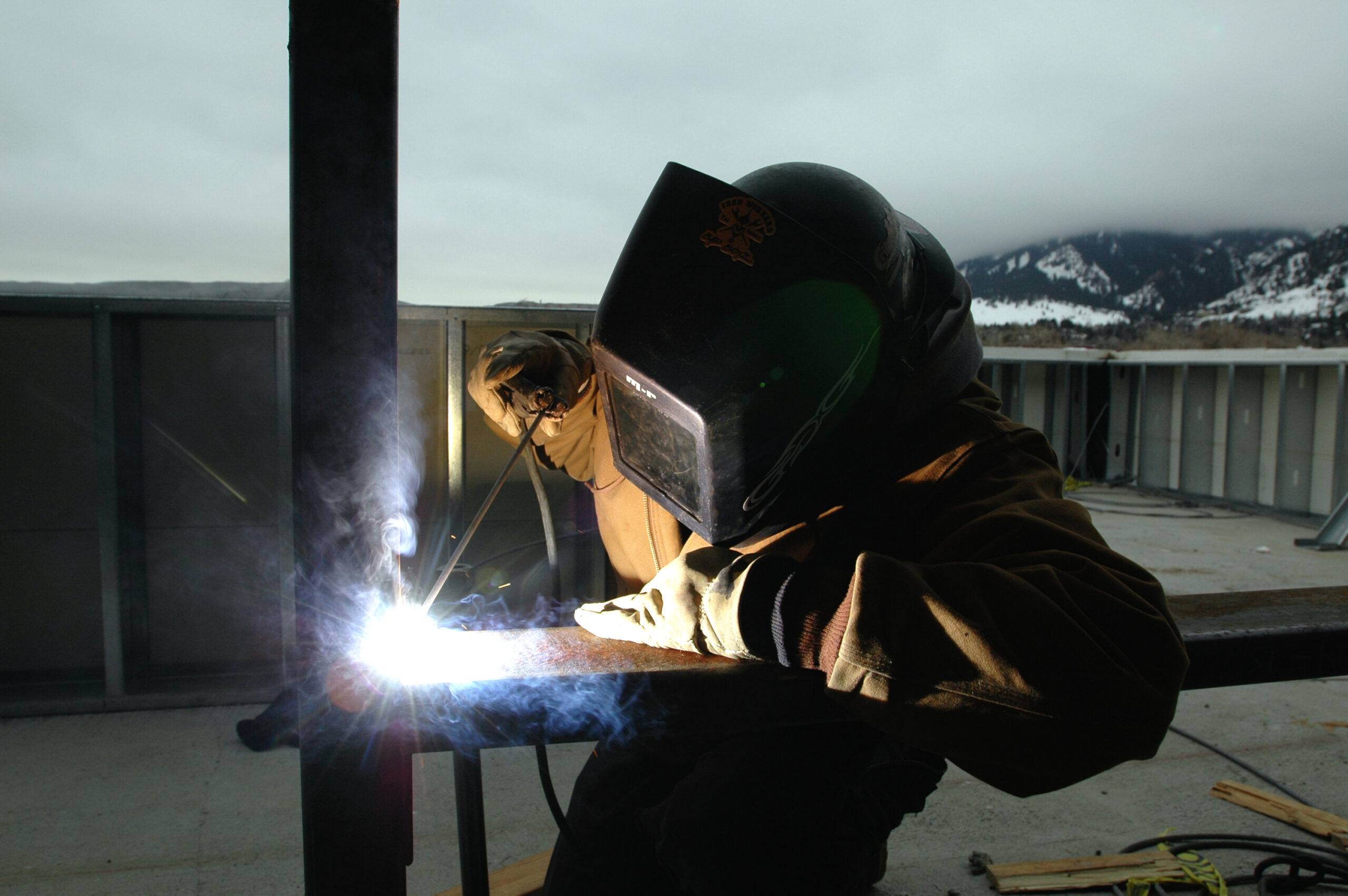
7. Ironworker – $25 to $35 an hour, plus benefitsironworkers

What they do: Two ironworking specialities that are particularly in demand are “connectors” and “rodmen.” A “connector” works up in the air on vertical uprights, attaching horizontal beams to them. A “rodman” lays the steel rebar grids that keep the concrete on a bridgedeck or a building floor from cracking.

Why it’s hot: Like many of the specialized trades, the workforce is aging in these fields, creating lots of opportunity for younger people. “We certainly foresee a need for a younger workforce,” says Scott Malley of Ironworker magazine, who believes that the tens of billions dollars that will be spent on bridge construction and repair in coming years will ensure an abundance of work. “We have significant recruitment efforts underway.”

How to get the job: The route into ironworking is through an apprenticeship program. There are currently more than 150 of these offered through local colleges all over the country. “The nice thing is, the apprenticeship programs cost nothing,” says Malley. “You earn college credits, and you can move on and finish with a degree in, say, construction management.” Meaning it’s both a stable career in it’s own right and one with potential for advancement.

8. Bridge engineer - $55,000 - $90,000bridgeeng

What they do: A sub-specialty of structural engineering, they participate in the design, planning, construction, inspection and repair of (predictably enough) bridges.

Why it’s hot: “We need more bridge engineers in this country,” says Pat Natale, executive director of the American Society for Civil Engineers. More than 72,000 bridges in America are structurally deficient. Some of those will need to be replaced. The rest will need to be repaired. Hundreds of thousands of others need to be inspected and monitored closely. Also new bridges will need to be built as part of the process of creating a high speed rail network in this country.

How to get the job: Start with a four-year civil engineering degree from an accredited college or university. Thereafter you may or may not need to do specialized graduate study. For programs, browse ASCE’s list.

9. Solar Panel Installer - $15 to $30 an hoursolar-install

What they do: Photovoltaic installers, as they are more formally called, mount solar panels on buildings. It’s a highly technical process that involves a careful consideration of location and angles. The installer is also responsible for making sure the panels are properly connected to the building’s electrical system and any “smart” two-way metering systems (which allow customers to get paid for surplus energy they generate) that may be present.

Why it’s hot: Obama has made it clear that addressing climate change is one of his highest policy priorities. The stimulus and his proposed budget devote vast amounts of money to incentives for American companies and households to go green. As we move away from traditional carbon-intensive energy sources and toward renewable sources, the use of solar panels by homeowners, businesses, schools and governments should skyrocket. Massachusetts alone is planning to spend $68 million to increase solar capacity by 600 percent in the next four years—and Massachusetts isn’t even in the sun belt, where the getting ought to be really good.

How to get the job: NABCEP, the North American Board of Certified Energy Practitioners, offers certifications for solar installers. Contact the organization for information about training programs.

10. Urban Designer - $45,000 to $100,000+ urbandesign

What they do: Design complex public spaces. The job is a hybrid discipline of architecture and urban planning, with the aim of creating balanced and livable cities, towns, and neighborhoods.

Why it’s hot: Recent experience has taught this country that the willy-nilly model of development doesn’t work. As Obama himself proclaimed recently, sprawl is dead. The antidote to sprawl is creating well-designed, walkable communities that are connected to a rail network. (Chris Leinberger of the Brookings Institute explains the principle in this interview.) The most successful model to date is the DC area, but many other US cities from Charlotte to Dallas to LA are following suit and redeveloping miniature “city centers” throughout the metropolitan area. Urban designers are specialists behind these projects. With rail now a signature issue under Obama, there will be a lot of opportunity to create these dense, walkable neighborhoods around new and expanded rail networks in American towns and cities. What’s the best case scenario for urban designers? “The federal government could stipulate that where there’s significant federal investment, local governments need to create an urban environment that’s highly compatible with rail enhancement,” says Steve Fimanowicz, communications director at the Congress for a New Urbanism.

How to get the job: Unlike the others on this list, urban design has been always been a rather sexy gig, so it’s competitive and starting pay can be low. But if you do want to get in, a good route would be a joint architecture and urban planning degree. Berkeley, for one, has a great program.

20 Responses to “You’re Hired! The 10 Hottest Job Opportunities in Infrastructure”

  1. Jorge Says:

    i wanna be a solar panel installer when i grow up!

  2. Austin Says:

    Great Post…. thanks!

  3. FT.com | FT Energy Source | The Source: Platts rocks boat; $300 crude; solar shake-ups; hot jobs Says:

    [...] 10 hottest jobs in US infrastructure [...]

  4. Andy Says:

    My dad is a heavy equipment operator. His union (IUOE) is looking for operators, especially for cranes. He said the average age of the operators in his union is in the 50s. Especially with the stimulus, that would be another good infrastructure career to get in to.

  5. Austoon Daily » You’re Hired! The 10 Hottest Job Opportunities in Infrastructure Says:

    [...] You’re Hired! The 10 Hottest Job Opportunities in Infrastructure [...]

  6. Lou Palacio Says:

    I’m a plumber located in El Dorado County and I have not seen any thing related to my line of work.

  7. Go Be A Farmer, Says Financial Guru » INFRASTRUCTURIST Says:

    [...] produce real things.” That’s a view we agree with, and though farming isn’t on our list of 10 hot careers, it’s part of the same broad [...]

  8. dfyjtyj Says:

    smart meters sound extremely scary i sincerely hope your predictions are completely off on your number 1 pick

  9. Walter Says:

    You forgot probably the hottest job out there: simple old trackworkers!

    Someone’s going to have to build and maintain the (hopefully) new lines of rail that will be laid in next few decades, and the job is also fun, good-paying, and keeps you in shape (except for the “smoke ‘em if you got ‘em” downtime that is common).

    Also, I know from experience that trackworkers know the best deli establishments in the New York area!

  10. djs Says:

    What about the Telecommunications field ?

  11. Rajib Das Says:

    I am a diploma civil engineer working in reliance Communication as project coordinator — was in L&T ECCD as Site Engineer — want to have a job of Site Enginner / Site Monitor any where in world.

    Pls find the attachment of CV —
    CURRICULAM VITAE
    Of
    RAJIB DAS
    e-mail : rajib_das2u2004@yahoo.com
    rajib.k.das@relianceada.com
    Vill.:Kismat Apurvapur
    PO+PS:Singur, DIST-HOOGHLY, Mobile:91-033-9331432174
    PIN.: 712409 91-033-9681099969
    WEST BENGAL.
    INDIA

    OBJECTIVE:
    Seeking an opportunity to further develop, share and utilize my knowledge in the Field of Civil Engineering.
    KEY QUALIFICATION:
     Having more than 10+ years of professional experience of leading multi disciplined group of qualified professionals in construction industry. A Diploma in Civil Engineering and is thoroughly conversant with construction supervision and monitoring of Civil engineering construction.
     I Have experience in Site Planning, Programming , Management & Timely Execution, Contractor Handling & Bill Checking, Rate Analysis & Coordination with Project Incharge & Vendor to complete the job timely.
     Now I Joined RELIANCE COMMUNICATION as Project Coordinator for WB, BI & JHK CIRCLE Project Management.
     Familiar with SAP
     I was in LARSEN & TOUBRO LTD (ECCD) as Site Engineer. Mainly involved in mass Excavation & disposal of excavated earth, mass concreting,Site Management & coordination with Higher mnanagement.
    EMPLOYMENT RECORD

    1. FROM : November 1998 – February 2000
    EMPLOYER : Bharat Construction.
    POSITION HELD : Site Engineer.looking after Howrah Bridge Maintanance Job.
    2. FROM : March 2000 – August 2003
    EMPLOYER : Rites
    POSITION HELD : Inspector looking after Howrah Bridge Maitanance Job— Painting, Rebet & Bolt Checking,

    3. FROM : September 2003 – September 2005
    EMPLOYER : L & T .

    POSITION HELD : Site Engineer posted in (1) Meghalaya for Cross Country Conveyor Project —- Client Lafarge.(2) Jamshedpur TISCO for Expansion Job Of TISCO.

    4. FROM : February 2006 – September 2006
    EMPLOYER : Stwarts & Lloybs of India LTD
    POSITION HELD : Project Officer posted in Tuticorine for Expansion Project of Sterlite Industries.
    5. FROM : October 2006 – January 2008
    EMPLOYER : M/S LARSEN & TOUBRO LTD (ECC) in Industrial Projects & Utilities.

    POSITION HELD : S1 Grade Site Engineer posted in Barh for NTPC Green field Project — was responsible for Track Hopper –Excavation (-15 m depth), Conc ( 16,000 cum) Rebar job —- fastest track hopper construction by L&T.
    Posted in Farakka NTPC for Track Hopper Construction.

    PERSONAL DETAILS:
    Date of Birth : 5th December 1976
    Nationality : Indian
    Languages Known : English, Hindi

    EDUCATIONAL QUALIFICATION:
    Completed Diploma 3 yrs (Civil) of WBSCTE University OCT 1998 with 1st Class.
    KNOWLEDGE IN COMPUTER APPLICATIONS:
    Conversant with MS Office, Excell , Word, Familiar with Internet, e-mail, SAP
    EXPECTED SALARY:
    As per company’s rules & regulations.

    (Rajib Das)

  12. Rajib Das Says:

    I am a diploma civil engineer working in reliance Communication as project coordinator — was in L&T ECCD as Site Engineer — want to have a job of Site Enginner / Site Monitor any where in world ———- as I want to have oversease contract — may i have any contract?

  13. The Daily Dig - ‘The NY Times Moved Our Cheese’ Edition » INFRASTRUCTURIST Says:

    [...] The New York Times takes a page from its storied rival, The Infrastructurist, and looks at newly chic get-your-hands-dirty jobs like electrical lineman and geotechnical engineer. (NYT and Infrastructurist’s 10 Hottest Jobs) [...]

  14. Esteban Says:

    Dear Rajib,

    I am sure you will get a contract; or something anyway…

  15. axeman Says:

    the smart meters were here and gone already. The Big transmission lines are almost complete here . The roads and bridges will be done here in 5 years. Nuclear will not happen cuz it actually is the most expensive once fossil fuel for mining and trucking the waste and the unreliabilty of the safety factor. as far as solar as soon as the oil lobby gets what they want solar will disappear as fast as it did 30 years ago. So basicallyu all this is a pipe dream and most wages which have fallen by as much as $10,ooo the past decade will fall even farther. The next 5 to 10 years will make the depression look like a picnic. American slavery has returned so people better get use to it and by the way the new country to emerge soon will be The Nort American Union and soon will merge with euorope and Asia to be 1 government. We as a society are doomed so get use to it.

  16. Lee Says:

    axeman,
    “Unreliability of the safety factor” in nuclear power is no longer a concern. The operation of current nuclear power plants is safer than operating a coal plant. There are also many researchers that are engineering realistic ways to recycle the waste for more power production. The recycling process has been shown to also reduce the radiation half-life of the waste significantly. In the designs I’ve seen, the recycle plant can be built right next door to the primary plant. Storage methods are also being developed that will allow for safe semi-local storage. Though I don’t think Americans would ever allow for a complete government merger with any country or continent, especially Asia, I do agree with the statement that our society is doomed. Unless, of course, somewhere out of the blue, people start taking education seriously and deem being smart as a “cool” thing. The current generation of teens and twenty somethings is plagued with ignorance about their duties as American citizens, History, Politics, economics, and science. The people of this country need to seek knowledge other than what their favorite celebrity is wearing, what’s cool, and what new video games are coming out. In stead of getting used to it, people should stand up for what they believe and make changes, and not the kind of changes our fearless leader is trying to make. However, that is a subject for another day.

  17. cory walsh conway Says:

    i rent cars and eat burritos for a living, is this wrong?. I like frogs as well as beer nuts.

  18. You’re Hired! 5 More Hot Jobs In Infrastructure » INFRASTRUCTURIST Says:

    [...] DiggSubmitA few months ago, when the financial markets were still in freefall, we looked at ten infrastructure-related jobs with bright prospects. As we noted at the time, the global infrastructure sector is poised to see $35 trillion in [...]

  19. Welding & Gases Today Editor’s Blog » Blog Archive » Robotic Arc Welding Tech Among Top Infrastructure-Related Jobs Says:

    [...] The Infrastructurist, a Web site for the construction industry, recently took a look at ten infrastructure-related jobs with bright prospects. [...]

  20. Tim Says:

    Tell me what will replace all the Union carpenter jobs that are being lost? Once a foundation has been poured (mainly by laborers) structural steel, precast and panels all get dropped in. The carpenters get a little bit of finish work and thats it. The jobs are gone.

Post a comment: