
Posted on Wednesday February 25th by Jebediah Reed | 680

<em>The Spam Museum in Austin, Minnesota, is a renovated Kmart</em>

The Spam Museum in Austin, Minnesota, is a renovated Kmart

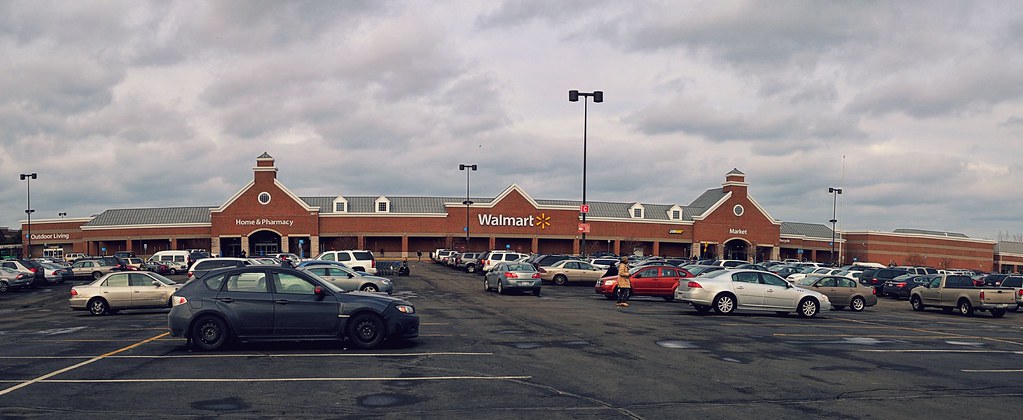
When Circuit City announced last month that it was going out of business, everyone’s concern was naturally with the 34,000 employees that got laid off. Less noted has been the fate of the chain’s 1,500 big box stores scattered across the U.S. and Canada. The company, whose locations average about 25,000 square feet, was an anchor tenant in many malls and shopping centers. With numerous other big retailers teetering, not only are the prospects for filling Circuit City’s spaces gloomy, there will likely be a rash of follow-on closings among neighboring stores. And many analysts think the national retail shakeout is still in its early stages.

The problem of retail vacancies on this scale is so new that it hasn’t really been studied yet. Perhaps the only authority on the subject of empty big box stores is Oberlin College professor and artist Julia Christensen. She has spent the last seven years traveling around the country seeking out and documenting cases of communities reclaiming abandoned big boxes and putting them to a socially productive use–for instance, as museums, libraries, rec centers, and schools. She wrote about it all in her recently published book Big Box Reuse (MIT Press). A few days ago, we got her thoughts on how towns and cities can make beneficial use of these vacant structures and turn a hole in the local fabric into a community asset.

Studying big box reuse is such a timely and fascinating project. How did you get started?
I began the project because I grew up in a small historic town in central Kentucky called Bardstown. It’s very well preserved with over 300 buildings in the national registry of historic places–and meanwhile Wal-Mart has expanded twice there involving three sites in town. The company’s original store, abandoned so they could build a larger structure on the other side of town, remained vacant for about ten years. Eventually the town needed a new courthouse building and they decided to build on that lot. Doing so really changed the civic structure of the town. It was very intriguing.

How so?
The town bought the whole lot including the Wal-Mart and all of the outlying stores. There was a Goodyear tire and a Radio Shack and a Chinese food restaurant and whatever. Those are now the police station, the EMS, and so on. There are also restaurants. It’s been turned into a government center.

So you guessed that other towns were dealing with the same problem–essentially a hole in the local fabric?
At the time it was just a hunch that other communities must be dealing with empty Walmarts and asking what to do with these buildings. I started doing research, found some sites, and went around the country documenting how these structures are being reused and talking to the people who are doing it.

Don’t they just feel like disposable buildings though?
Exactly. They give off this aesthetic of disposability–maybe because corporations leave them behind so frequently. But it’s funny because they’re really anything but disposable. All of the buildings that I visited in my book were first generation big boxes, some built in the 60’s. And these groups that I documented moving into them–turning them into libraries and schools and so forth–are not thinking in temporary terms. They’re thinking long term: 50 or 100 years.

Often these are what’s left after a regular old Wal-Mart morphs into a Super Wal-Mart?
Yeah, actually. In my book there are ten case studies and every single one was vacated because a larger structure was built nearby.

But my guess is that the fundamental dynamic is changing–that most vacancies these days are from retail chains blowing up. Linens N Things, Steve & Barry’s, and Circuit City all come to mind.
Absolutely. What I was looking at when I started this project is just the beginning of what we’re going to be looking at.

Circuit City in particular seems like a doozy. Have you heard anything yet about what’s happening with all these vacant stores?
Not specifically, but everybody’s thinking about it. And obviously we’ll begin to see soon.

What are a couple more examples of towns making creative use of an empty big box?
When I give speeches, audiences always love to hear about the Spam museum, which is in a renovated Kmart building in Austin, Minnesota and also the story of the RPM Indoor Raceway which is a gokart track in a renovated Wal-Mart in Round Rock, Texas.

Has the Spam museum been a civic success?
It absolutely has, in fact. The Kart in that case was in the downtown area. When they wanted to expand they relocated to the outskirts of town, but a lot of surrounding businesses also vacated in order to follow Kmart’s traffic. So a huge hole was created in the downtown area and remained for several years until the local corporation Hormel Foods decided to create a museum about their famous meat product that would draw people into downtown Austin. They had a design competition and the firm that won–Paulsen Architects out of Mankato, Minnesota–is LEED-certified and they tried to implement sustainable elements into the structure as they repurposed it.

So many levels of irony here: a sustainably-built Spam museum in a former big box store as a community project to save downtown.
Yes, there’s obviously an irony of thinking of a big box in terms of sustainability at all. Ultimately, I’ve just been trying to stress the urgency of the situation. By investigating how communities are dealing with the effects of this pattern of construction we’re also highlighting the fact that we need to change it.

Tell me about the Go-Kart track.
The RPM Indoor Raceway was in a renovated Wal-Mart building in Round Rock, Texas, near Austin. The business was started by two brothers and had league nights and community events all the time. At the site, there had been stipulations on the future use of the property when the real estate company acquired it from Wal-Mart. This tactic is often employed by big box retailers: the corporations that build the structures make clear what the buildings can and cannot be used for in the future to ward off potential competition. (And if you take the most obvious use of a big box building away–that is, being a big box store–somebody is going to have to get creative.) The Raceway was was being used as a “land bank,” a non-competitive renter, bringing in rent and activity. Unfortunately, after a couple of years in operation it was evicted, in part because the potential value of that real estate had gone up.

go-karts
Part of the book’s innate appeal seems to come from this flip of sensibilities–a symbol of formulaic sprawl being transformed into something unique and local.
Well, I think it comes back to the pragmatic. There are so many hundreds communities that are looking at at least one big empty big box and wondering how to deal with the problem. That practicality is, in part, what is appealing about the book.

You describe big box stores as unsustainable. In what way particularly?
The main thing is that they are built on a car-centric structure. So you can’t really get to these buildings without cars. Then there’s the acres and acres of impermeable parking lots, land that we’re just paving over.

Plus, each comes with its own infrastructure package which is generally useless for anything else.
Yes. No matter what we do with these buildings we’re still looking at millions and millions of dollars worth of corporation specific infrastructure that’s going into town after town.

Roads, extra lanes, and so on. Let’s just consider the parking lots for a moment. What do you do with all those acres of asphalt? Have you found any cases where they have been effectively transformed into something better?
Well, again it’s all relative. You know, what do you do? But there was a church that I visited in Pinellas Park, Florida–a reclaimed big box store–and they actually planted trees all over their parking lot, greened it up quite a bit. And what they found is that the companies around there began to green up their parking lots too. So they sort of raised the bar in the area. I’ve also seen communities, when they start to realize that these structures will inevitably be abandoned, stipulate things like greener parking lots or berms so the lot isn’t visible from pedestrian byways.

It seems to me a big box store’s primary characteristic is being ugly. Is there any way to make a big box store not ugly?
Well, one thing that communities are beginning to do is ask the corporations to build multiple facades on the front of the stores because it’s easier to break them up in the future–that way you can enter it from different access points rather than one major entrance. With the Spam museum, the firm that designed it did institute sidewalks and things so that it was actually very pedestrian accessible. They knew that museums are supposed to feed into the downtown shops. So it was a site where they really did work hard to implement sort of a pedestrian friendly atmosphere.

There was a library in Missouri that you documented that was a great case study.
Yes, Lebanon, Missouri. That’s an interesting story. They moved a library into a Kmart site. But the complex also includes a Route 66 museum which is a great source of pride to the community, being right on the old historic Route 66. They started this museum as the draw for enthusiasts that cruise through there. They also have a themed cafe. So they tried to develop a structure that would bring people to the library for multiple reasons and kind of get them to stay all day. They’re very successful and it was also a huge community-building effort–a lot of people donated time and energy and resources and skills to building the place.

Have you devised some kind of plan that other communities can use to replicate the successful examples you brought to light?
When I began the project I hoped that I could go in and find a template. Instead, I found that it was very much case by case–even the real estate packages vary tremendously from place to place. Sometimes there’s ten real estate companies from all over the world involved in one site: a company from Germany owns the building and somebody from California owns the lease on the land. It can be crazy.

It seems like there might be real economic opporunity for big box conversion consultants.
Well, I could be one myself, actually. [Laughs] I’m contacted all the time about this and I am kind of working on getting a group together that could help facilitate this.

Are other people trying to get into the game?
Well, I’ve got my google alerts set up so every now and then I see the website of a real estate company that’s started specializing in big box reuse because they read the book or something. I think that it is beginning to spawn stuff like that.

Photo credits: RPM Indoor Raceway, Interior shot and Spam Museum (renovated Kmart building, Austin, MN), from Big Box Reuse, by Julia Christensen (MIT Press)

21 Responses to “Big Box of Trouble: Dealing with the Coming Plague of Empty Superstores”

  1. Susie Sonneborn Says:

    I loved this piece! This is so fascinating–and inspirational–that for a demented moment it had me wishing we had a local abandoned big box store to get brilliant with. Instead, I’ll send this along to folks who do live in the land of big boxes, with the hope this gets read far and wide. Great way to inspire people to think their way out of the (big)box!

  2. Reusing big box stores. From a Kmart to the Spam Musuem. | Politics in the Zeros Says:

    [...] have been taking empty big box stores and converting them into public spaces, go kart tracks, museums, and office space. Most such conversions so far have [...]

  3. My Old Circuit City is a…Church!?!?! « Counter Culture Says:

    [...] Why can’t we come up with these ideas? Anyway, many of these tenant changes are fascinating, some of which are detailed in this interview. [...]

  4. The Bellows » Blighters Says:

    [...] at the Infrastructurist, Jebediah Reed has an interview with Julia Christensen, author of the book Big Box Reuse. The book discusses ways to turn a plague [...]

  5. Anna Troupe | Creative » Blog Archive » Imploding Retail Chains = “Giant” Opportunity for Socially and Environmentally Responsible Design Says:

    [...] giants? Good question, and one which more and more communities find themselves forced to answer. Read this interview with professor, artist and author, Julia Christensen, for some unusual yet uplif… Click here to download a PDF copy of my [...]

  6. Fort Worth Real Estate » Blog Archive » Big Box Blues Says:

    [...] Professor, artist, and author, Julia Christensen asks “What do we do with all these empty Big Box retail locations”?  [...]

  7. Froggie Says:

    I’ve been to the Spam Museum. Had no clue it was a former K-mart.

  8. Big Box of Trouble: Dealing with the Coming Plague of Empty Superstores « Ukiah Blog Live Says:
    [...] reading Big Box of Trouble at the Infrastucturist→ Hat tip Energy Bulletin [...]

  9. DrumBeat: February 28, 2009 | Bear Market Investments Says:

    [...] Big Box of Trouble: Dealing with the Coming Plague of Empty Superstores The problem of retail vacancies on this scale is so new that it hasn’t really been studied yet. Perhaps the only authority on the subject of empty big box stores is Oberlin College professor and artist Julia Christensen. She has spent the last seven years traveling around the country seeking out and documenting cases of communities reclaiming abandoned big boxes and putting them to a socially productive use–for instance, as museums, libraries, rec centers, and schools. She wrote about it all in her recently published book Big Box Reuse (MIT Press). A few days ago, we got her thoughts on how towns and cities can make beneficial use of these vacant structures and turn a hole in the local fabric into a community asset. [...]

  10. Dorothy Stolarski Says:

    This article has hit the mark about big box development and its life cycle. The time for big box is ending. I agree we need to find creative ways to reuse the dreams of business that have become the nightmare for communities. In London, ON. CANADA a community group has formed known as the Friends of Meadowlily Woods to preserve and protect this environmentally significant area. The area is also rich in heritage, that has a hertiage home in Meadowlily Woods, Meadowlily Bridge and the Meadowlily Mill. These three items give the area a heritage status. No more Big Box, your time has come and gone. A new era is emerging that looks towards sustainablity and the importance of the environment. We only have one earth, let’s start taking better care of it.

  11. Amped Status » Blog Archive » Economic Crisis = USA Riots Says:

    [...] the masses that already can’t pay back loans and credit cards, let alone afford to keep their warehouses, stores, offices and homes. The US government, which is about to pump another $787.2 billion of tax payer [...]

  12. Reign of Tara » Interesting Article - Re-using the Big Boxes Says:

    [...] Or, what do do with a dead Wal-mart? http://www.infrastructurist.com/2009/02/25/big-box-of-trouble-dealing-with-the-coming-plague-of-empt... [...]

  13. Lourdes Says:

    “Q: You describe big box stores as unsustainable. In what way particularly?

    A: The main thing is that they are built on a car-centric structure. So you can’t really get to these buildings without cars. Then there’s the acres and acres of impermeable parking lots, land that we’re just paving over.”

    I don’t follow. Does she think the automobile is going away?

  14. Dan’s Plans » Blog Archive » 101 Ways to Redevelop a “Dead Mall”… Says:

    [...] Big Box of Trouble: Dealing with the Coming Plague of Empty Superstores [...]

  15. Weevie Says:

    The author might want to check out Metrovation and perhaps visit 2 of their
    successful mall rehab projects in the Puget Sound Area: Lake Forest Towne Center, developed in the 60’s and rehabbed in the 90’s, and Crossroads mall in Bellevue, also an old style mall rehabbed into new, mostly commercial uses. What’s interesting about their projects is that the new uses are mostly for private businesses as opposed to government.

  16. Bigbox your brain « The Morgan Hill Grid Says:

    [...] the blog “Infrastructurist’ comes an article “Big Box of Trouble: Dealing with the Coming Plague of Empty Superstores“, an interview: The problem of retail vacancies on this scale is so new that it hasn’t [...]

  17. The Daily Dig - NY Times ‘Special Infrastructure Issue’ Edition » INFRASTRUCTURIST Says:

    [...] column, Rob Walker speaks with two experts we’ve done Q&A’s with on this site–Jill Christensen about re-using empty big box stores and Ellen Dunham Jones about reclaiming dead malls — who [...]

  18. John Ryan | Blog » Blog Archive » Recycled retail Says:

    [...] an interview with the Infrastructurist blog, Christensen comments on the local, even idiosyncratic nature of [...]

  19. Ted King Says:

    To : Lourdes
    Re : Does she think the automobile is going away?
    I think the lady is trying to get us to re-think our land use / waste habits. I live in a high-transit city (San Francisco) and have worked in various parts of the surrounding area. It is difficult and time-consuming to shop at the stores in suburbia - I have felt like I am trekking across the Sahara Desert when I cross some of those parking lots. The lack of sidewalks makes some stores unfriendly and at times dangerous to get to.

    Yes, cars will be with us for some time to come. But when you compare three local malls (Stonestown, Serramonte, and Tanforan) only one - Serramonte - is bus-only (non-primary service). The other two have rail connections (Muni M-Ocean View, BART) which makes them more accessible. Those two also have primary-level bus service (Muni #28, Samtrans #390+#391). All three have large parking lots. I know this makes the SF Bay Area a little weird - many of our inner circle malls are tied into the transit systems. Some of this was in the initial design and others by in-filling. I’m hoping to see a covered bike parking area with room for adult trikes at a mall one of these days.

  20. The Trouble With Big Box Stores « Simple Savvy Says:

    [...] in death, big box stores hurt the community.  The article Big Box of Trouble: Dealing with the Coming Plague of Empty Superstores details the problems of having empty shells all over the [...]

  21. Mind The Gap « Empty Mass Ave Says:

    [...] behind a bleak corner right in Central Square. Empty big box stores in Middle America are being turned into churches, but what will become of the empty storefronts in the [...]

Post a comment: